September 2025 - April 2026

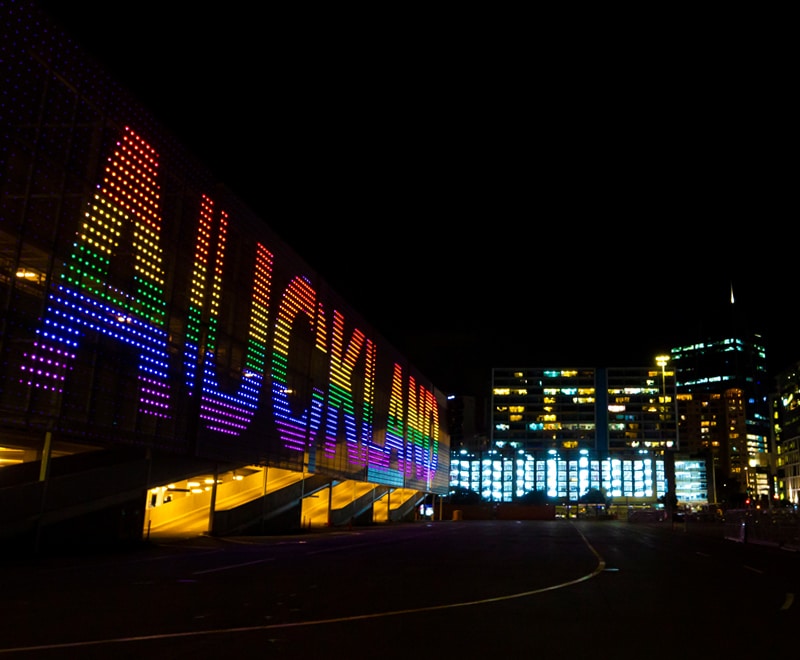
A contemporary art project at the edge of land and sea. Ports are charged spaces. They mark a boundary, but also a beginning.

Projects by the next six artists will explore the movements and migrations of bodies, species, and stories; the bureaucracies and rituals of departure and arrival; the sensory registers of crossing, light, weather, anticipation, fear; the port as both infrastructure and interface, asking who or what gets to move, and who or what is held in place. A port not just as a physical site, but as a threshold between past and future, here and elsewhere, the known and unknown.

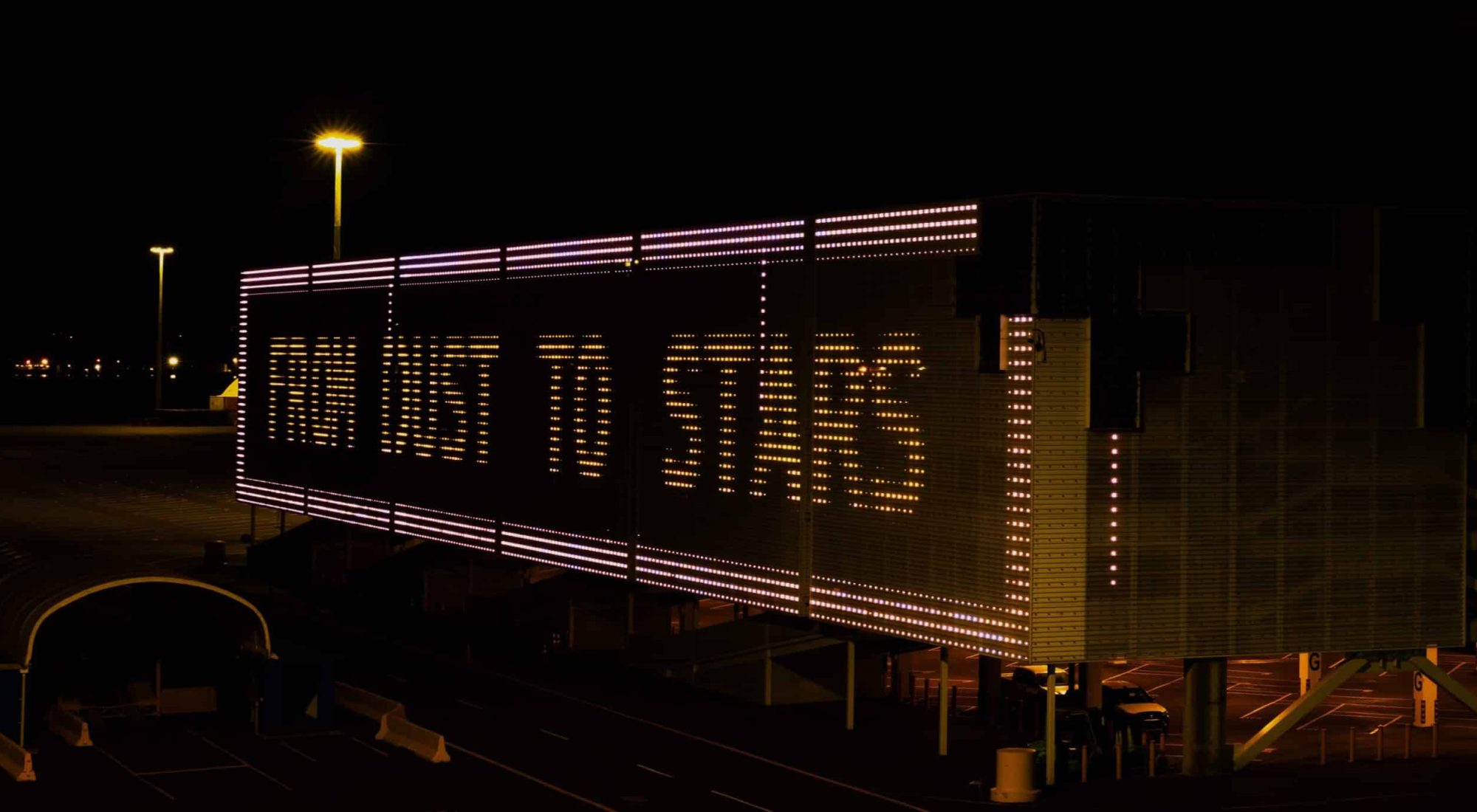
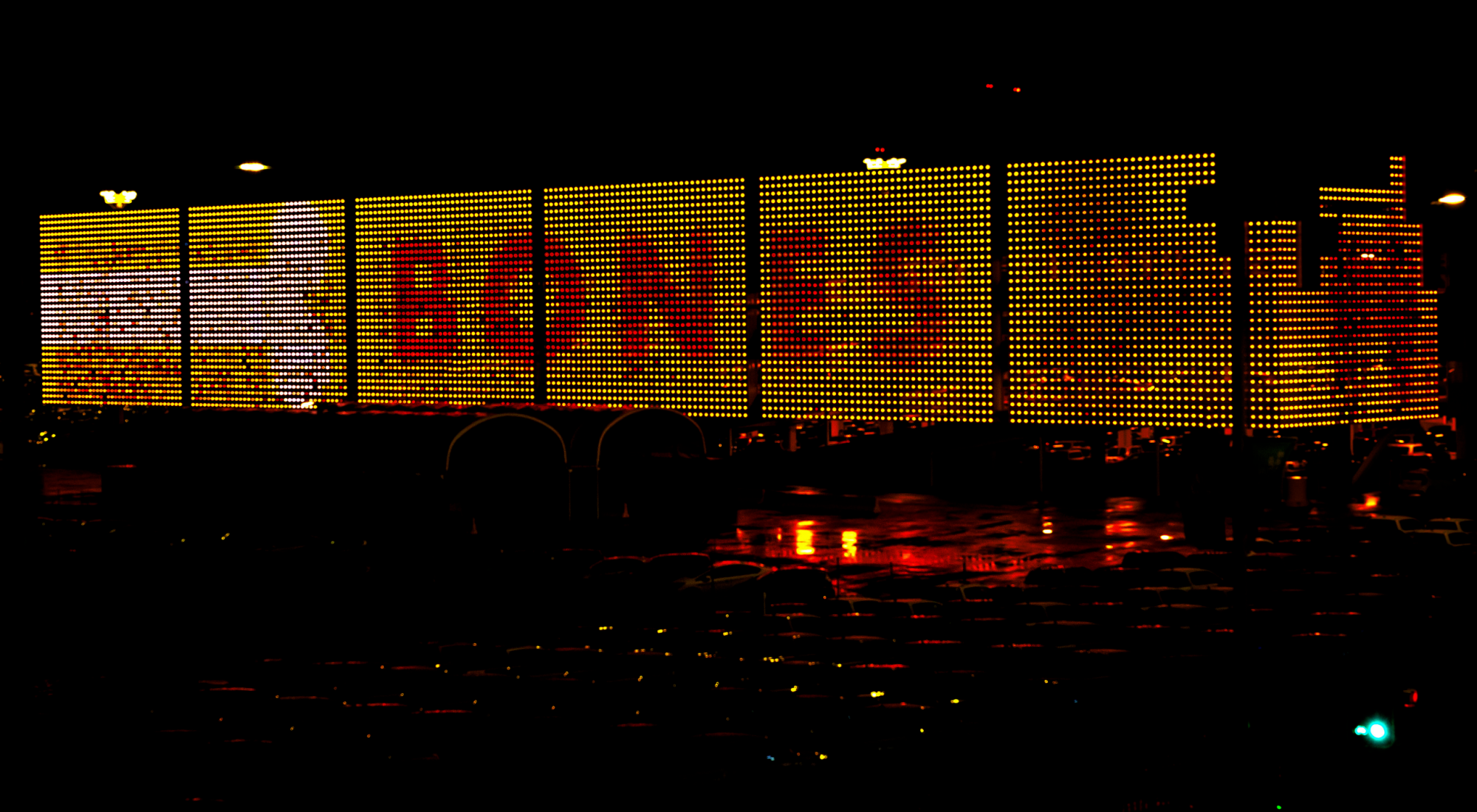
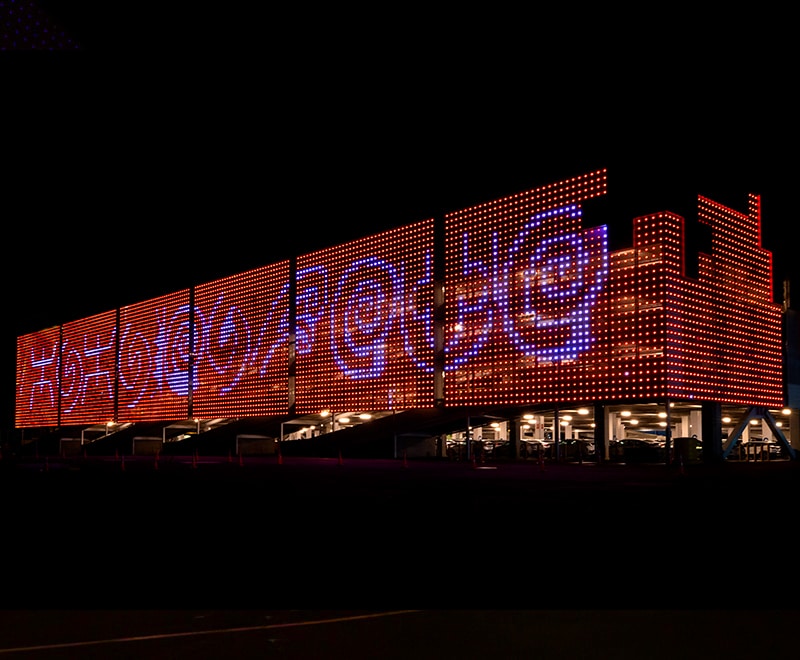
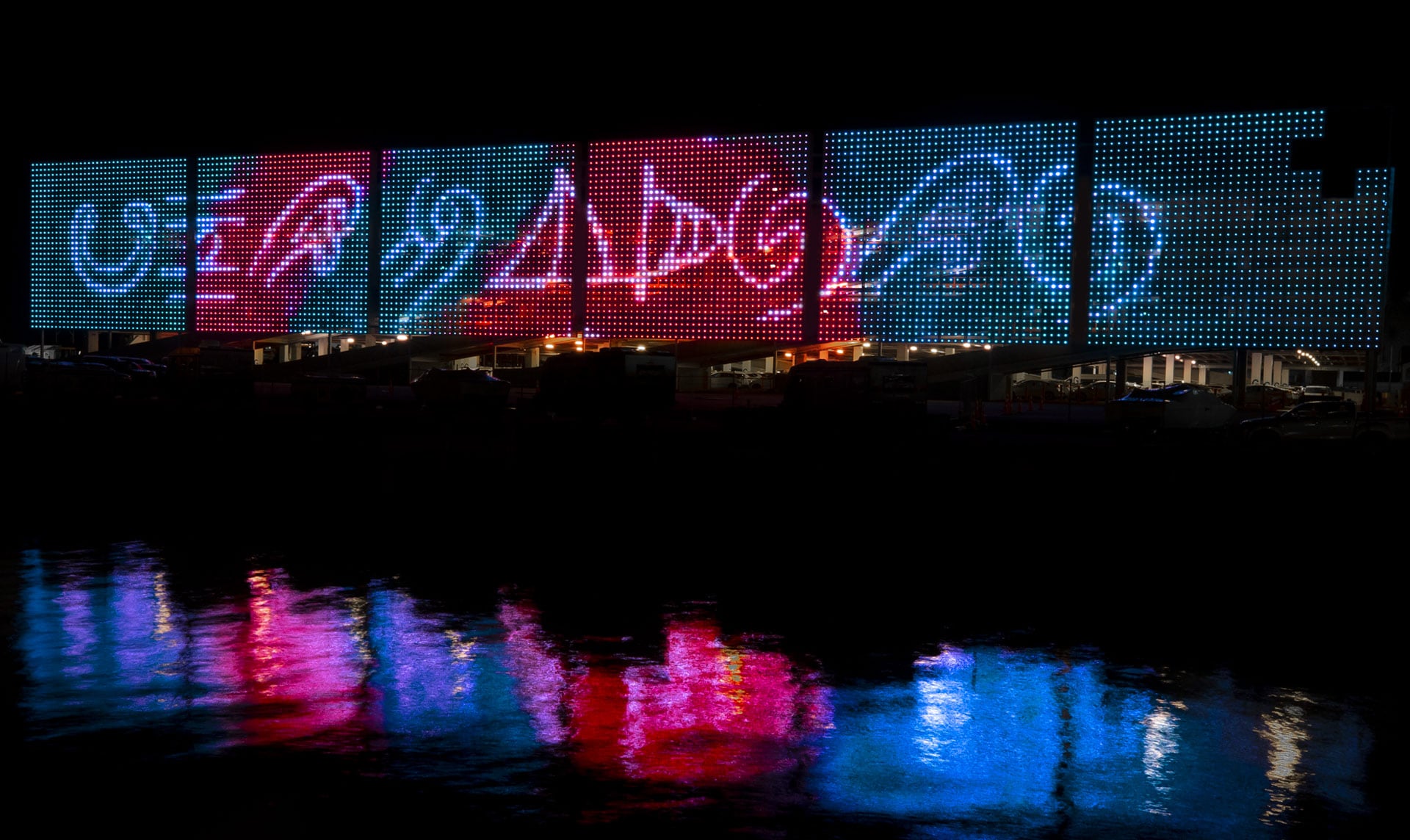
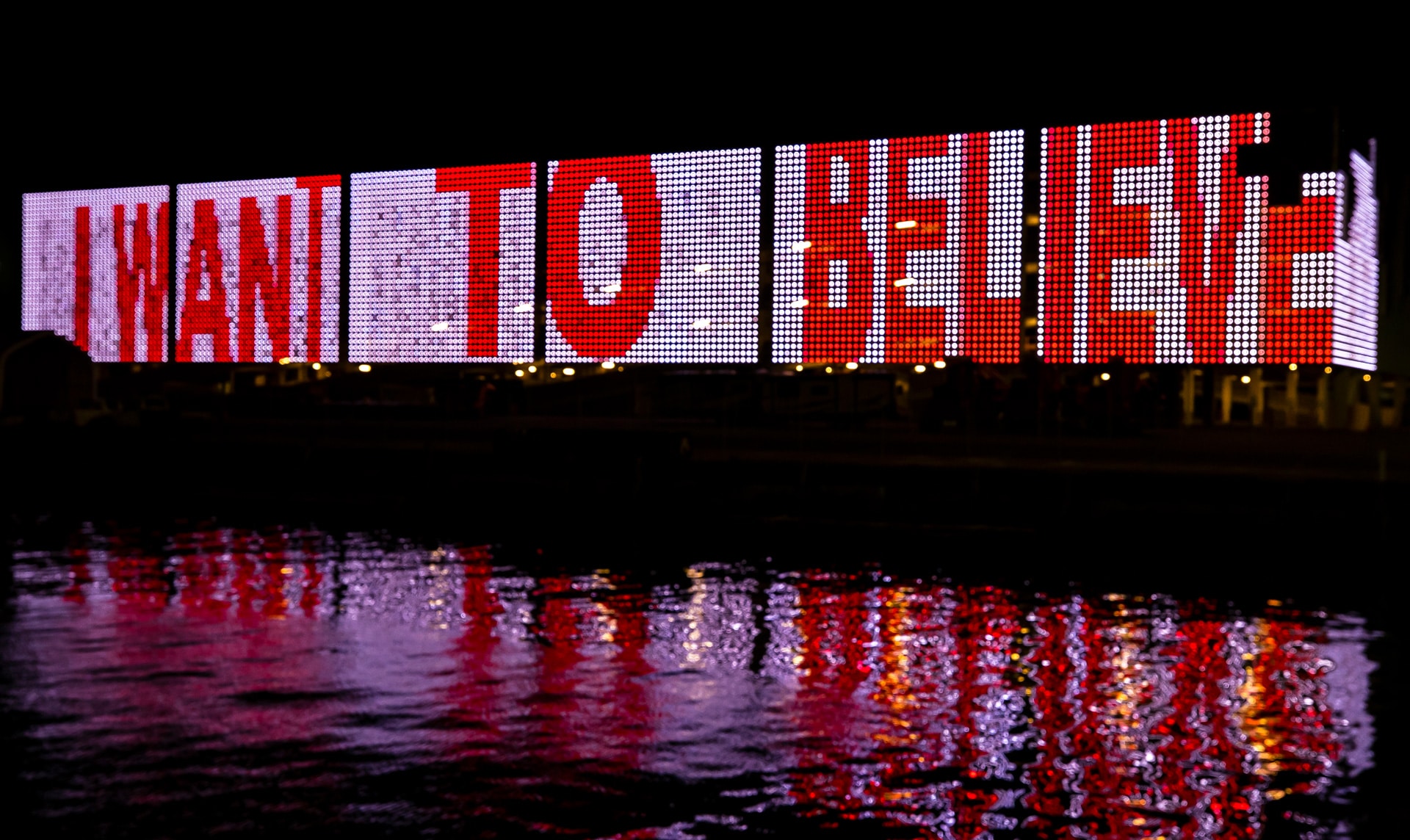
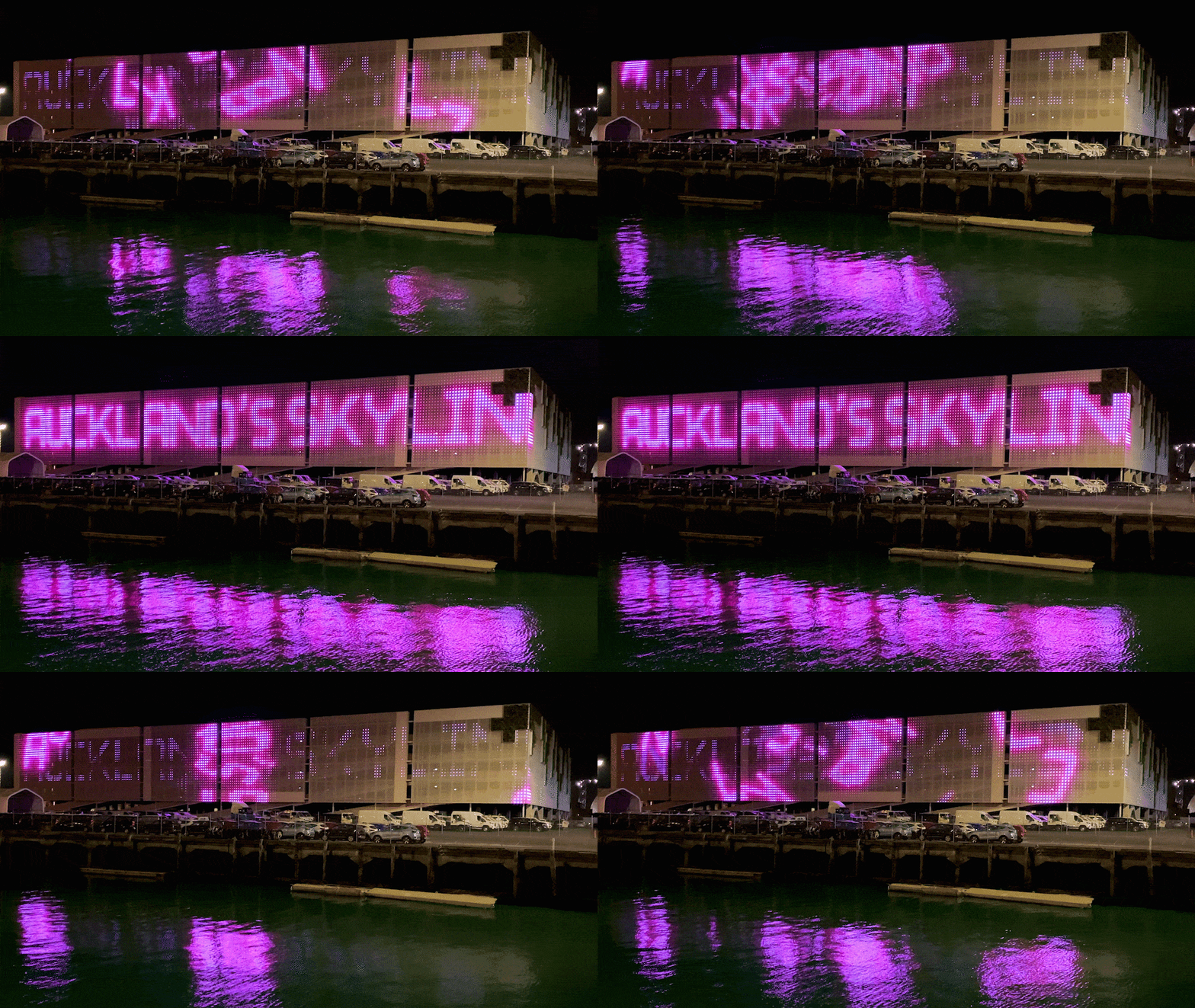
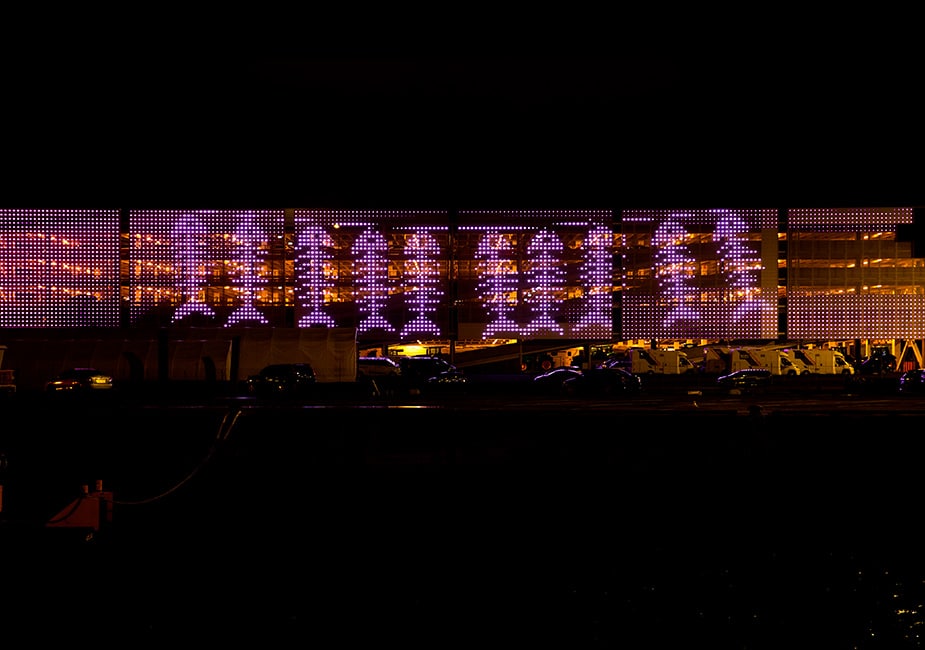
Ko au eni means "here I am." Kalisolaite ‘Uhila has set the phrase in the red and white of the Tongan flag across the face of The Lightship. It is the answer one gives in Tongan when called, a signal of presence and readiness to serve, familiar from Tongan hymns and from everyday speech. A New Zealand viewer may also hear a quiet conversation with Colin McCahon's I AM paintings, which lettered the first person of the Old Testament God across the New Zealand landscape. The "I" in Ko au eni is a different one, ancestral and diasporic, "woven from voices before me.‘Uhila's body has done the speaking until now: homeless for Mo‘ui tukuhausia, asleep under ngatu in Mohe, sitting through the equinox at the Ha‘amonga ‘a Maui. Ko au eni is the first work where the body is absent, and that absence is what the text is about.

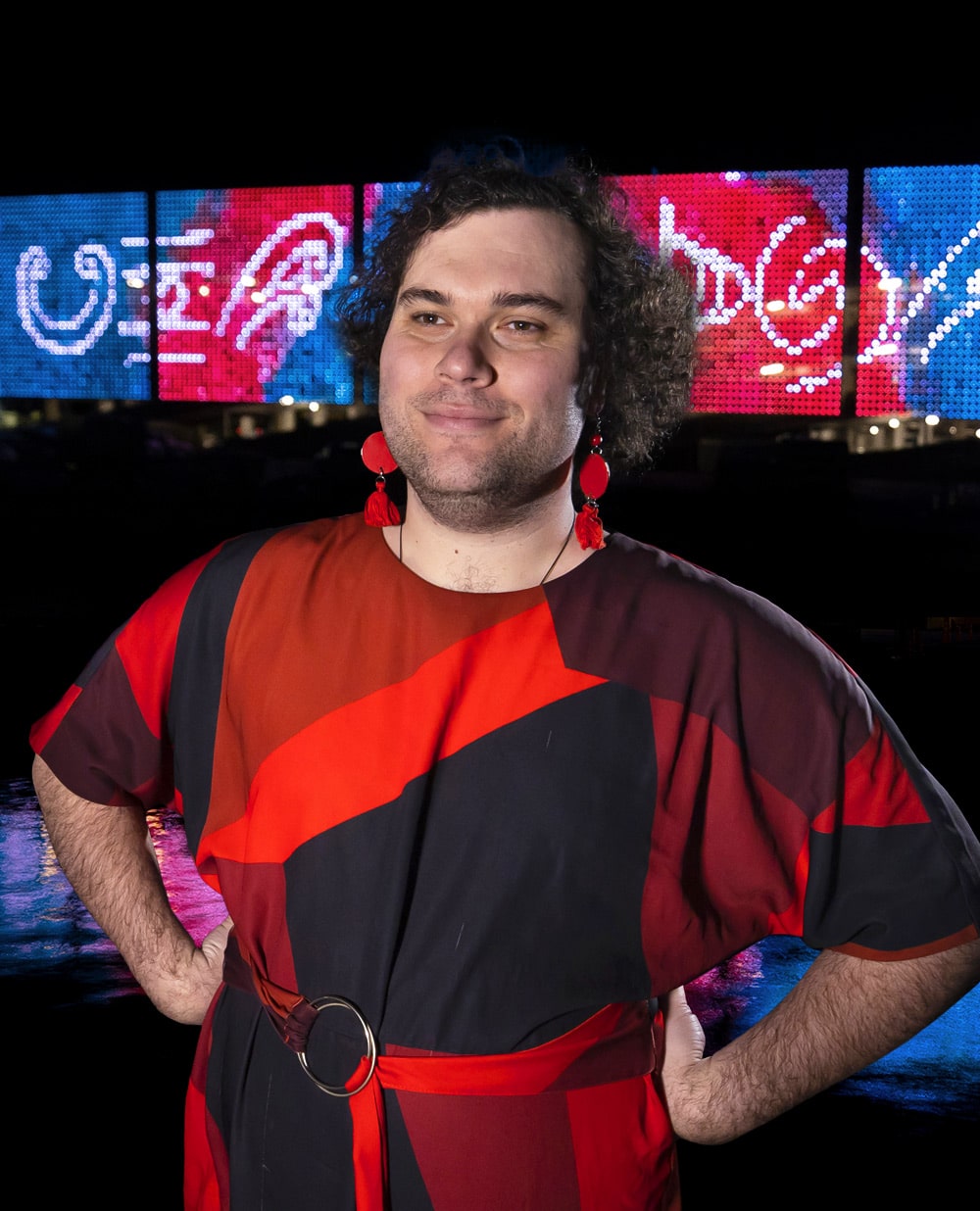
Kalisolaite ‘Uhila is an award-winning performance artist based in Tāmaki Makaurau Auckland. Born in Tonga, ‘Uhila’s art practice centres on live performance, in which the expression of his ideas take place, unrehearsed, in gallery spaces and other locations outside of a traditional theatre environment. His path to becoming a performance artist began as a print-maker studying at Auckland University of Technology. Studying a visual arts degree, he realised that he did not need paper to make a print but could bring image and sound together. He started to use his body as a tool and his first performance was using an antique saw to make marks on wood.‘.

Colour Function 3:30 (2026)

(Download) Press release*

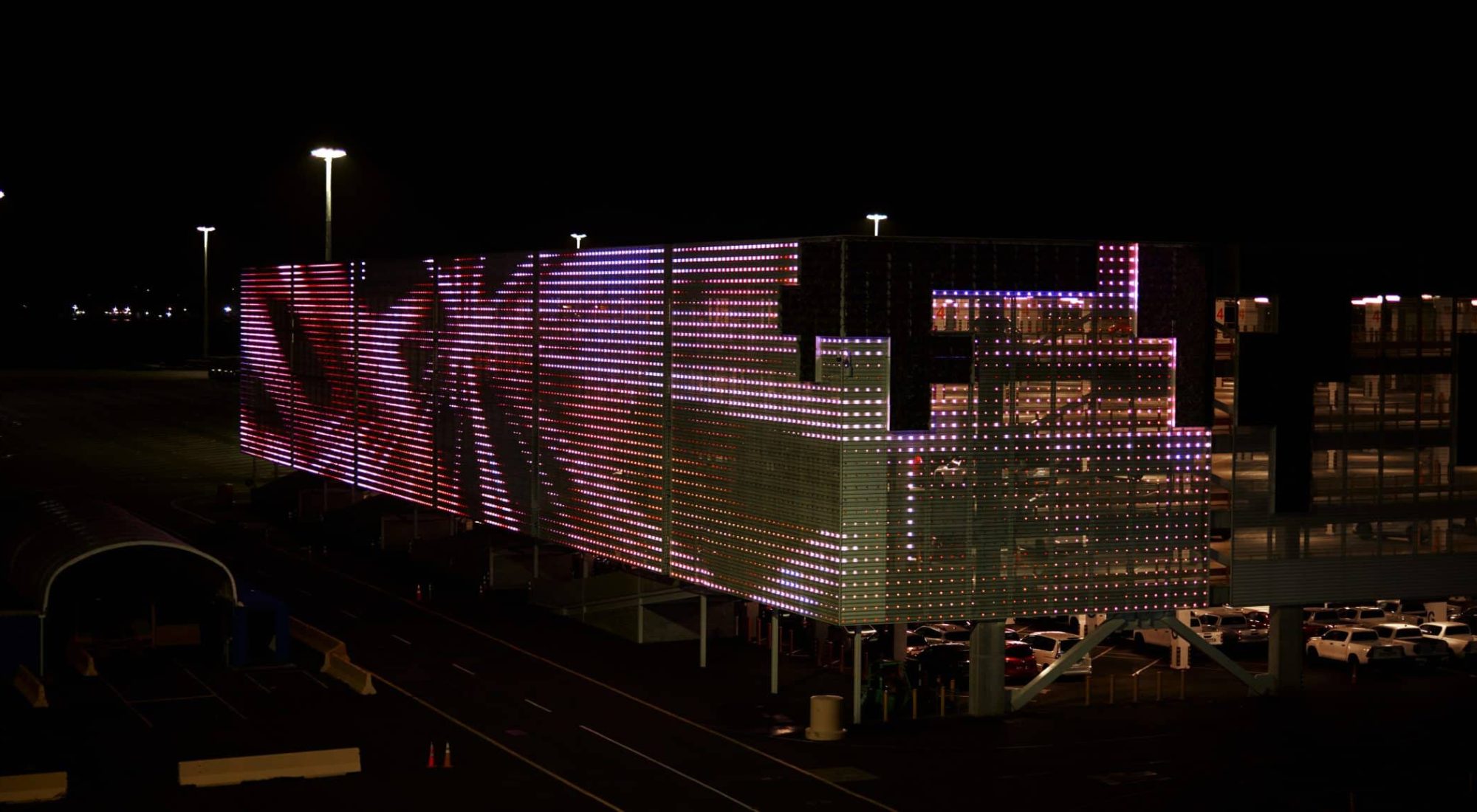
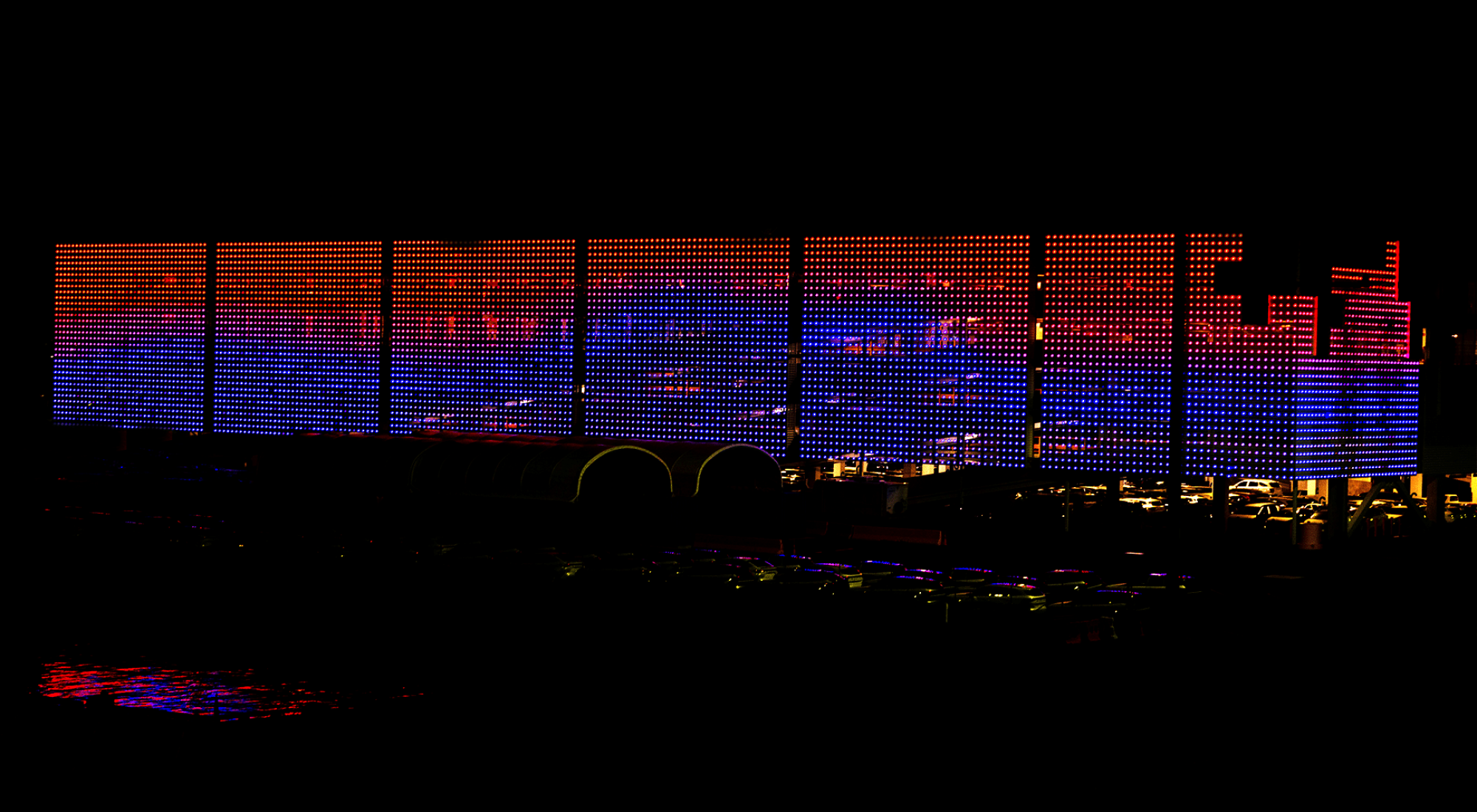
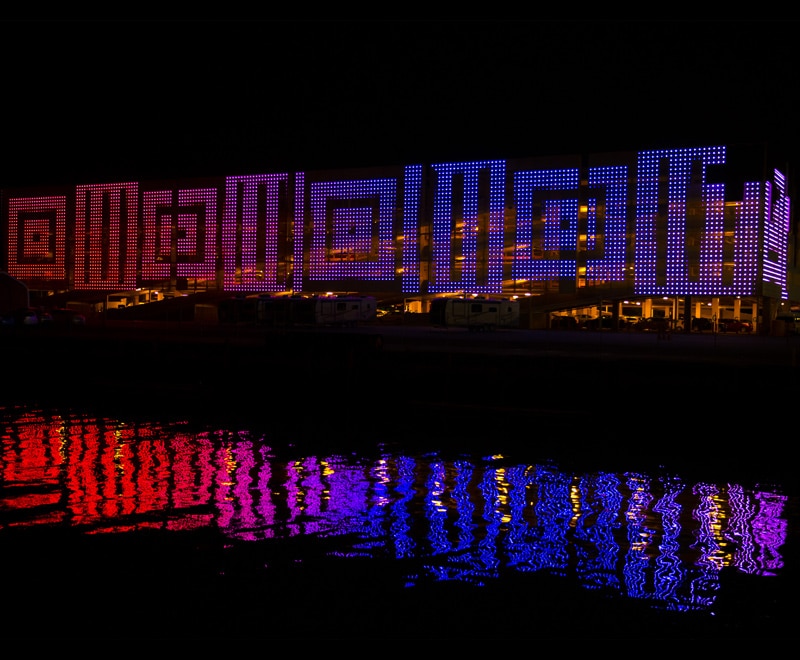
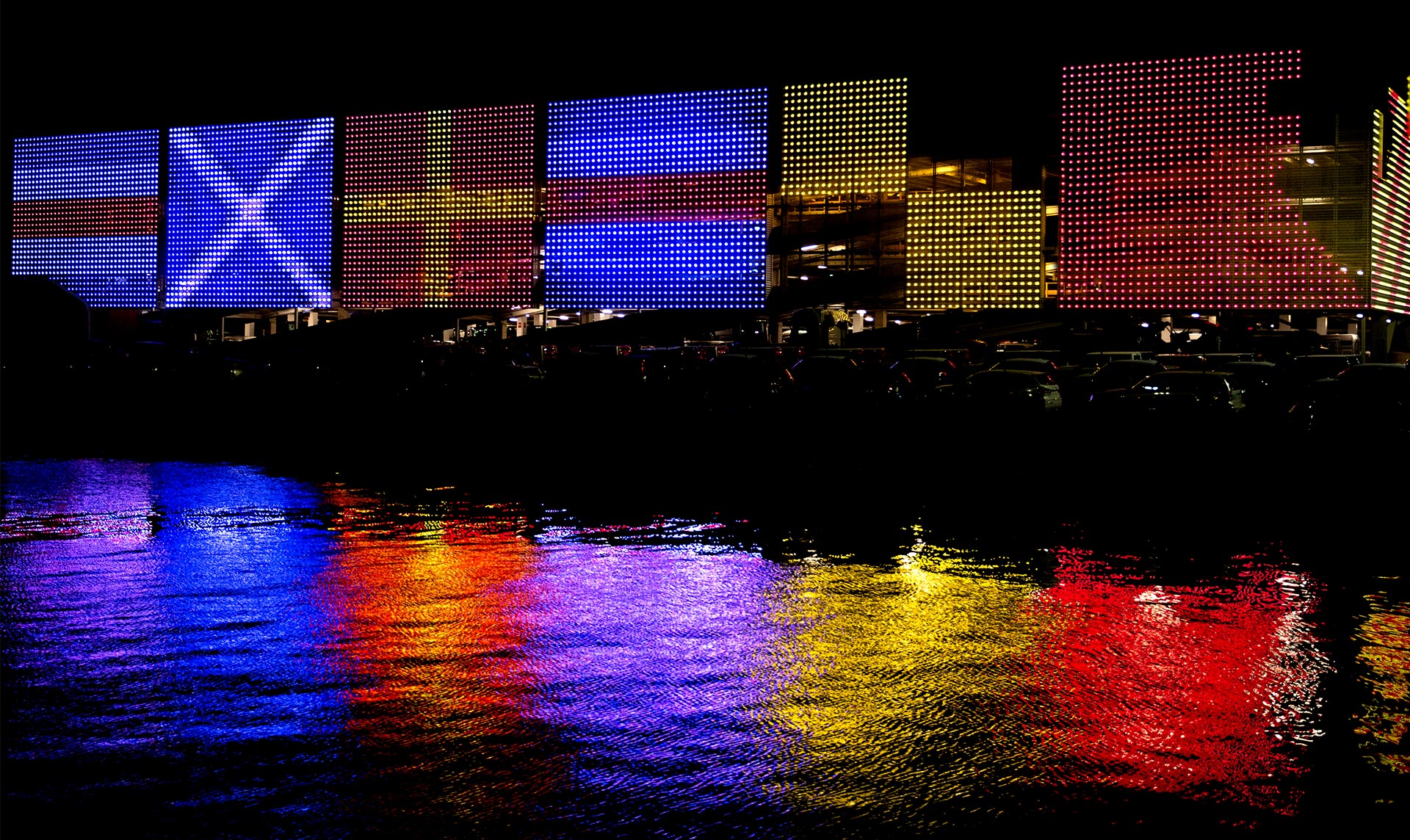
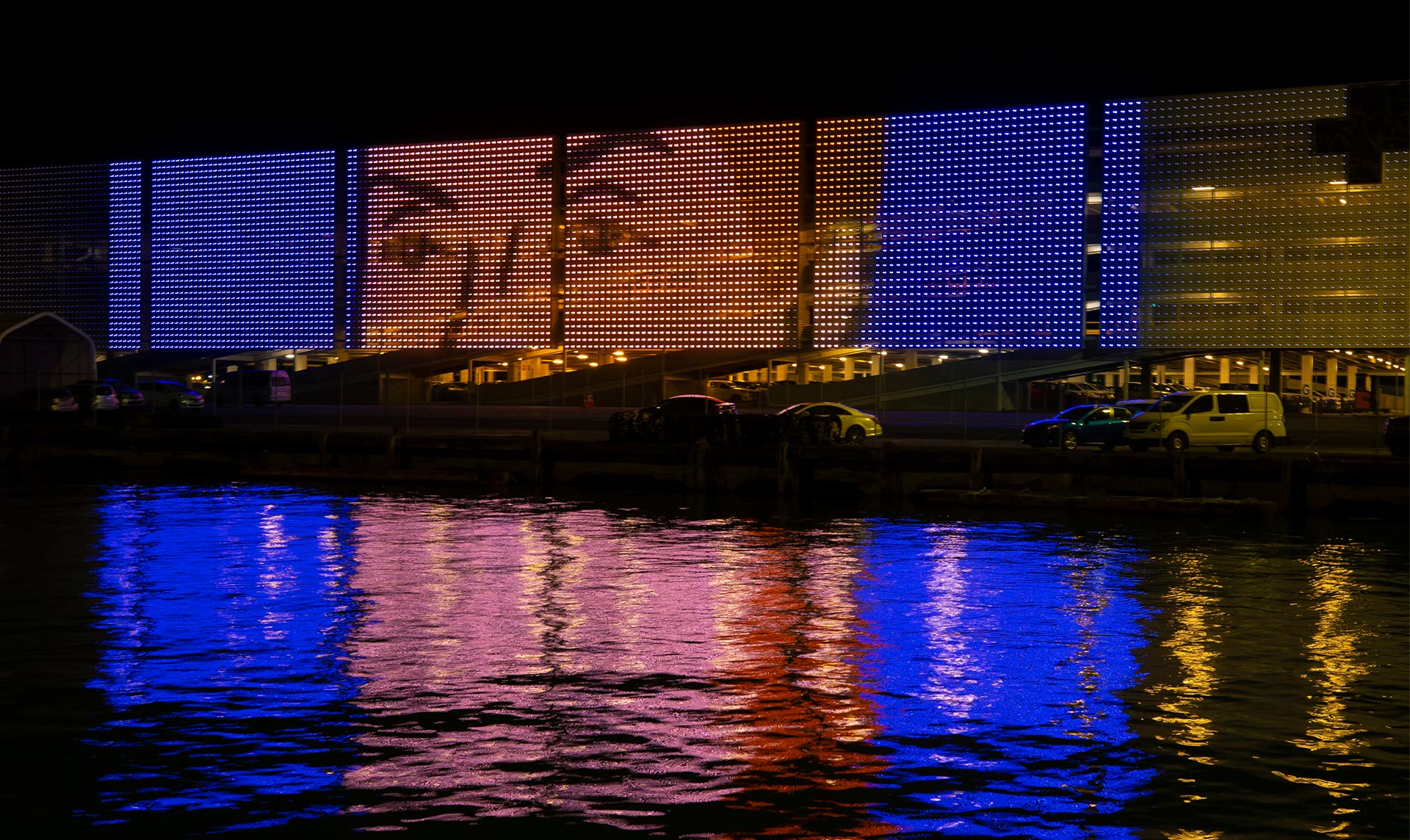
In Jack Hadley’s new work for The Lightship, the display surface is broken down into discrete, square chunks of colour, each of which correlates to part of the physical construction of the grid itself. Rather than projecting a floating, discrete image “onto” the building, Hadley foregrounds the underlying structure, making the viewer “see” the building in its entirety.

Within the confines of this macro-scaled micro-display, Hadley uses his seven coloured “pixels” to transform the building into a colour study or exercise, playing off purples, yellows, greens, oranges and blues against one another, allowing their relative values to inform and mutate the viewer’s perception of their neighbours.

Born 1989, Auckland - Jack B. Hadley is a contemporary New Zealand artist known for playful, anthropomorphic works blending jewellery, furniture design, and mechanical engineering. An MFA graduate from Elam School of Fine Arts (2020), Hadley merges industrial materials and traditional craft, creating sculptures that challenge boundaries between utility and art. Featured in exhibitions like Auckland Art Gallery’s Aotearoa Contemporary (2024) and collected by Auckland War Memorial Museum and Chartwell Trust, his inventive practice attracts critical acclaim for its distinct fusion of form, colour, and playful innovation.

Fathom, Furlong, League (2026)

(Download) Press release*

Fathom, Furlong, League by John Ward Knox

John Ward Knox presents a single, simple scene, lit and featuring an incandescent horizon. The work's content emerges quietly through incidental detail. A lamp reflects in the glowing screen of a laptop playing a nature documentary, its light waxing and waning with the subject’s breath. It is an invitation to slowness.

Born 1984, Auckland - John Ward Knox is a New Zealand artist known for his conceptually rich and delicately executed works that blur the boundaries between painting and sculpture. A graduate of Elam School of Fine Arts, Knox creates finely detailed black oil paintings on silk, often layered and suspended to reveal shifting imagery and spatial depth. His sculptural works, crafted from materials such as wood, bone, metal, and found objects, emphasise tactility, transparency, and temporal slowness. Knox’s practice is marked by poetic restraint and a deep sensitivity to materials, inviting meditative engagement and quiet reflection. He has exhibited widely in solo and group exhibitions across Aotearoa and Australia, and his work is held in major public collections. Awards such as the National Drawing Award and the Frances Hodgkins Fellowship have recognised his significant contribution to contemporary art in New Zealand.

I Have No Body, and I Must Move (2025)

(Download) Press release*

Long-time collaborators, Jess Johnson and Simon Ward, present I Have No Body, and I Must Move, an animated video that unfolds like a ritualised side-scroller.

Jess Johnson and animator Simon Ward form a New Zealand–born, Melbourne/New York–based duo whose immersive art practice bridges hyper-detailed drawing, animation, video and virtual reality. Their major 2018 VR installation Terminus, commissioned by the National Gallery of Australia, invites viewers on a “choose-your-own” journey through psychedelic, architectural realms via travellators and gateways.

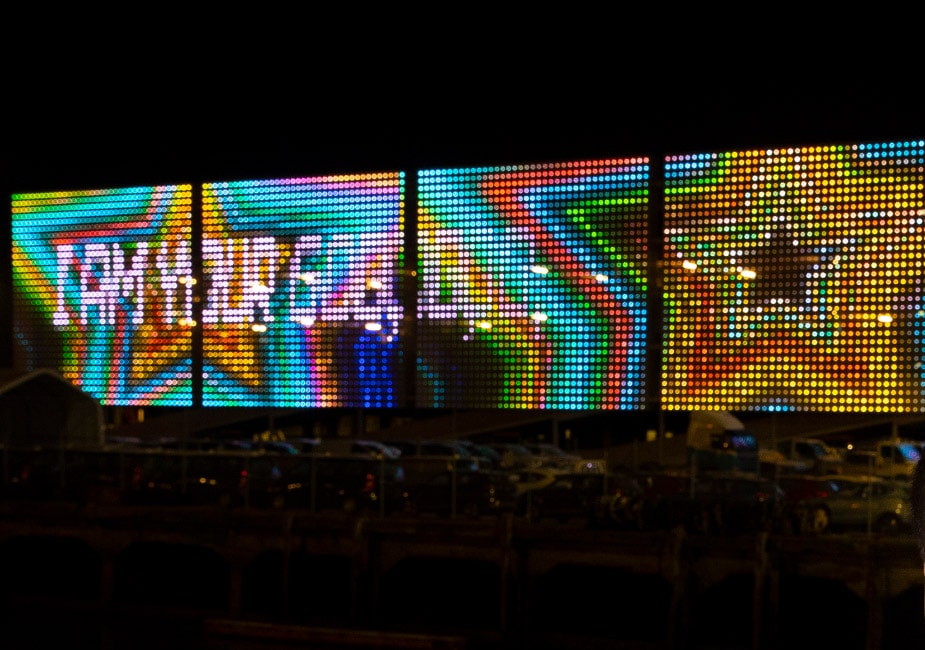
Esther Stewart reimagines the Lightship’s monumental screen with a looping curtain form drafted in AutoCAD and animated to rotate endlessly. The curtain repeats and unfurls with playful rhythm, lending the work to the atmosphere of a carnival ride. In Stewart’s hands, the motif becomes both architectural and theatrical, transforming hard-edged geometry into a spectacle of colour and motion.

Esther Stewart is an Australian artist based in Melbourne, known for her geometric abstract paintings and architectural collaborations that bridge art and design. She studied fine art at the Victorian College of the Arts, and her work is characterized by crisp geometric forms through which she explores space and perspective.

Alex Chalmer's piece, Cut Line, presents a single, continuous action: an industrial grinder etching a glowing incision across the façade of The Lightship’s screen. The act of cutting, central to both fabrication and film editing, becomes a gesture of transformation, reshaping perception through repetition, friction, and illumination.

Alex Chalmers is a contemporary artist whose work explores the intersection of architecture, ideology, and materiality. Based in Rome, Chalmers integrates historical and cultural references into his installations, inviting audiences to question notions of progress, labour, and preservation in a rapidly changing world.

White Collar Eclipse (2024/25)

(Download) Press release*

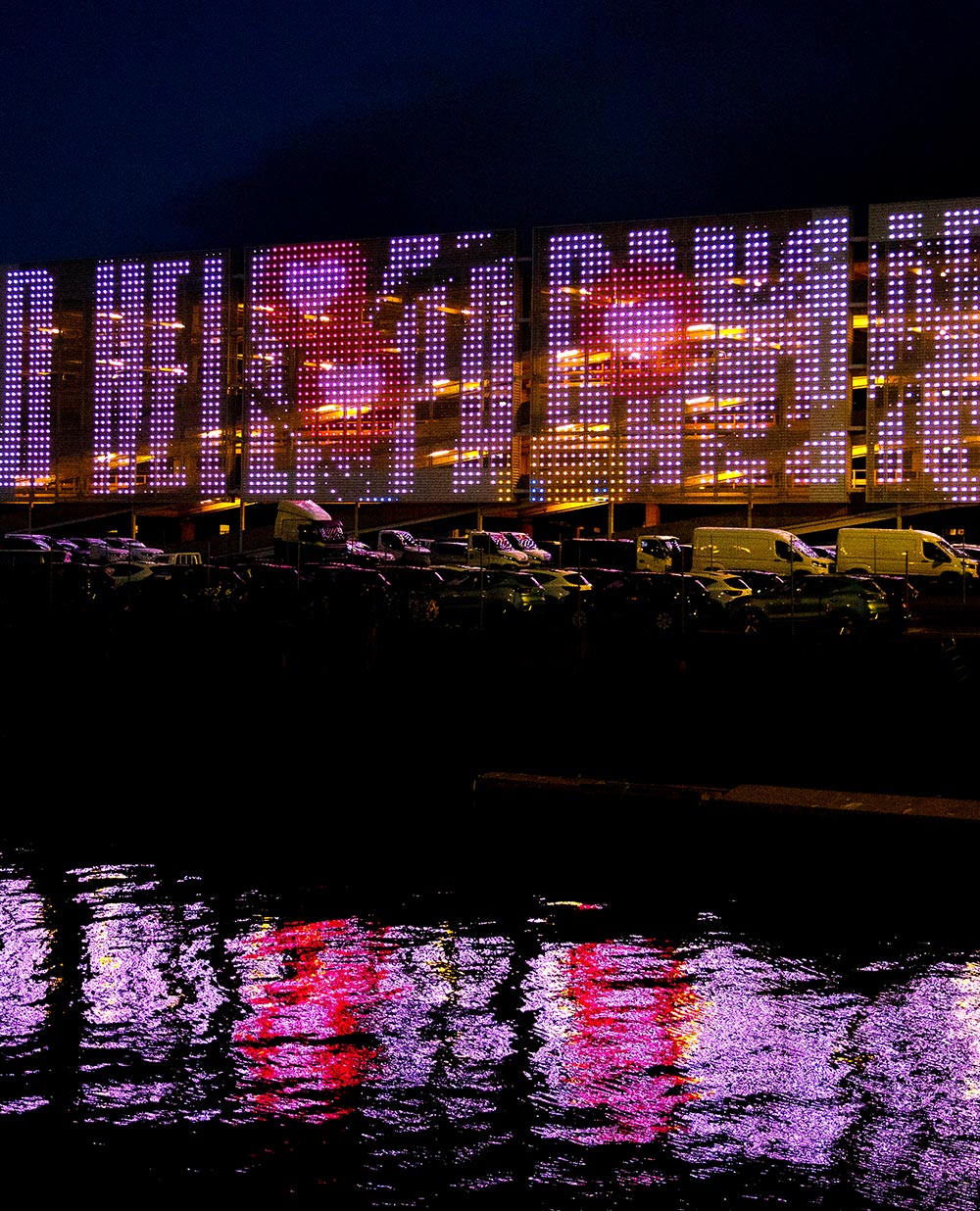
Oscar Perry's piece, White Collar Eclipse, merge poetic precision with the evocative glow of neon-like typography, creating a layered meditation on time, resilience, and transformation. The phrases, suspended between personal reflection and collective memory, recall Perry’s practice as a poet, where fragmented narratives unfold with humor and gravity.

Oscar Perry (born 1988, Kent, UK) is a Melbourne-based artist whose energetic studio practice focuses primarily on abstract painting characterised by a great diversity and pace of mark-making often combined with composite materials.

In Nicola Farquhar's piece, Slow Fever, scrolling passages from Mary Shelley’s Frankenstein novel, in which the young Victor recounts the near-madness of his creative fervour, are accompanied by a cheerily rotating modernist colour wheel.

Nicola is currently based in Auckland and is a painter that works primarily in oil on linen. Her paintings often use rich and vibrant colours and she explores traditional portraiture through experimentation with colour, space, and science fiction elements.

In Clinton Watkins’ Frequency Colour, bands of coloured light, patterns and undulating swathes of seemingly-random visual noise pass over the screen like capricious, technological weather.

Watkins works across audio-visual installation and experimental music and has been producing, exhibiting and performing his work for over 20 years throughout New Zealand, Australia, Europe, Asia and the United States. Clinton has a Doctorate in Fine Arts and is Programme Director at AUT’s School of Future Environments.

Sky Sculpture (Viewport) (2024)

(Download) Press release*

This piece is part of an ongoing series of works by André Hemer that focuses on the idea of materiality in relation to digital space by using 3D scans of sculpted paint elements to create rotating digital forms or intersecting groups of enigmatic objects.

André Hemer’s works explore the intersections between digital media and painting. His interest in sampling digital media—including scans, found digital images or systems, and digital drawings—is born out of a desire to synthesise the concerns of the post-internet age with more traditional methods and techniques. Hemer’s work has been exhibited widely, with solo presentations at the Kristin Hjellegjerde Gallery; COMA Gallery, Sydney; LUIS DE JESUS, Los Angeles; Gow Langsford Gallery, Auckland; Yavuz Gallery, Singapore; and Chalk Horse Gallery, Sydney.

A Long White Cloud (2023/24)

(Download) Press release*

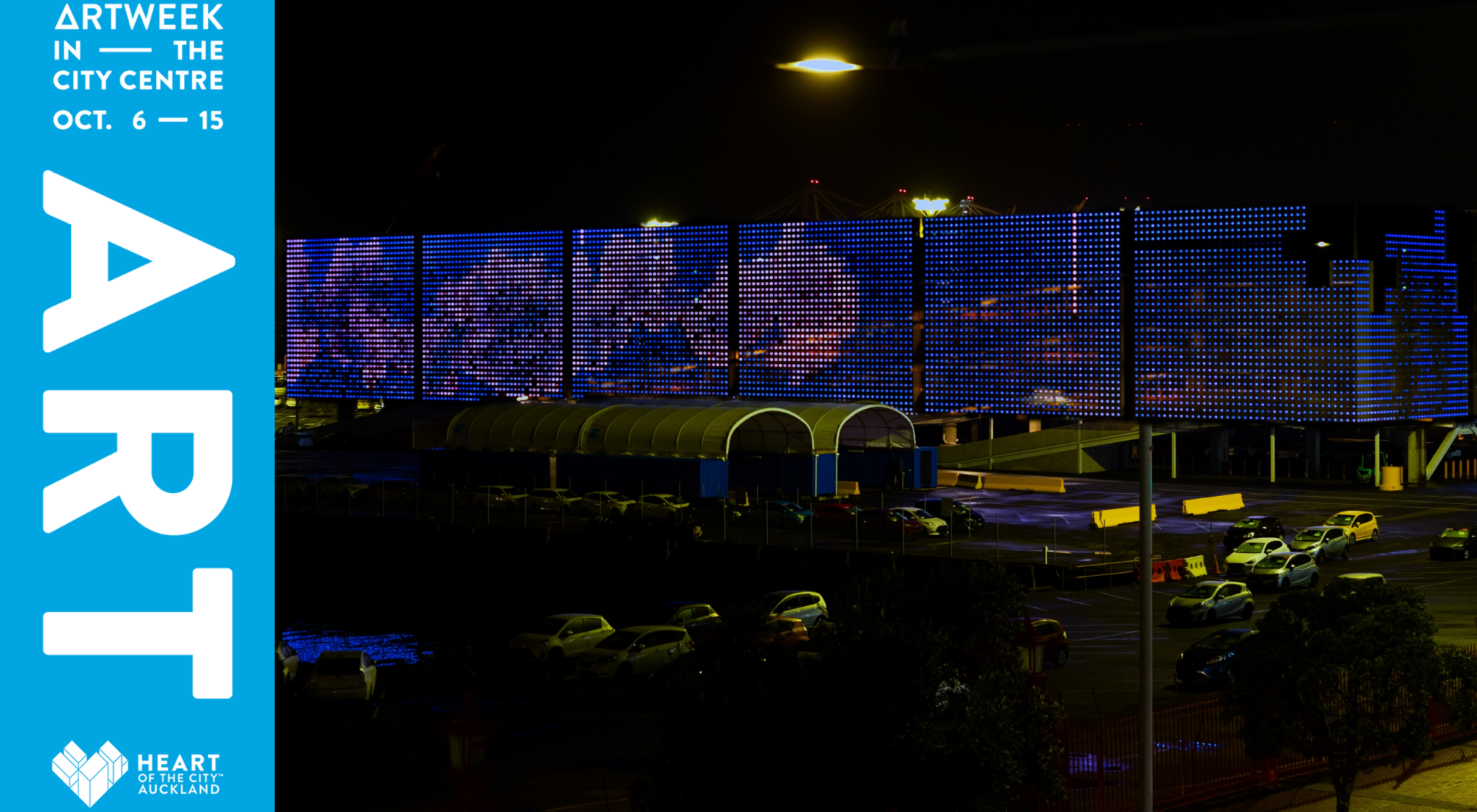
In Jae Hoon Lee's new work for The Lightship, A Long White Cloud, a scrolling band of clouds drifts across an impossibly blue, sparkling sky. The work presents a panoramic window onto a sublime archetype of the sky-as-metaphor, symbolising freedom, release, salvation, and any number of other positively charged ideas.

Lee’s digital photographs, video installation and sculpture have been exhibited widely in New Zealand and internationally over the past fifteen years, and acquired for both public and private collections. Jae Hoon Lee's piece is part of Artweek in the Auckland city centre taking place from October 6-15, with over 50 pop-up exhibitions, galleries, laneway installations, free art walks and more.

Heavy Frame (WAIRUA) (2023)

(Download) Press release*

In Heavy Frame (WAIRUA), the work’s text content, which reads “YOUR BONES ARE STRONG LIKE MINE :)”, suggests connectivity or reciprocity. Being installed on Matariki, a time to remember and pay respect to those who have passed away, this work also has a monumental or tributary quality. As the two-part title suggests, the work juxtaposes the solidity of bones-as-momento-mori with the idea of a soul or quintessence that outlasts the physical form, playfully inserting itself into commonplace narratives about death, dying and the afterlife

Turumeke Harrington is a Wellington based artist who works across sculpture and installation. Her practice is characterised by bold colours and references to domestic forms and materials. Sitting somewhere between art and design she is interested in exploring how objects, material and colour can subvert, challenge and express mātauranga Māori.

In Emma’s Rain, Andrew Beck brings the themes and ideas that permeate his photogram and installation practice to the macro-scale video format of The Lightship. In Emma’s Rain, footage shot using a thermal-imaging camera is cropped and manipulated to produce a mirage-like terrain of shifting colour and flowing, organic shapes.

Andrew Beck lives in Wellington, New Zealand. Beck continues to exhibit widely in New Zealand and overseas and his works are held in major public and private collections both nationally and internationally. In November 2019 he was awarded an artist-in-residence at the Robert Rauschenberg Foundation in Captiva, Florida.

Chlorophyll (Port of First Arrival) (2022)

(Download) Press release*

Sonya Lacey’s new site-specific video for The Lightship presents footage which pans over a red-hued array of plants and vegetation. The extreme close-ups highlight slight movements of plants in the breeze, giving them an animated, dynamic quality, while the measured slow pace of the camera feels exploratory, or even voyeuristic. Equal parts clinical and hauntingly atmospheric, this footage was captured using a camera shooting at the 680 nanometre wavelength, or the near-infrared part of the visible spectrum.

Chlorophyll (Port of First Arrival)builds on previous works in which Lacey connects the physiological needs of plants with those of humans, and with a broader idea of how time is experienced via the rhythms of the body.

Sonya Lacey lives in Tauranga and works in a range of media including moving image, sculpture and language. In 2021 she was the Dunedin Public Art Gallery Visiting Artist, a residency that culminated in the one-person exhibition Totally Dark. Her exhibition Weekend was nominated for the 2021 Walters Prize and exhibited at Auckland Art Gallery Toi o Tāmaki. She has exhibited throughout Aotearoa at multiple galleries. Her moving image works have been exhibited internationally including at the State of Motion Festival of Moving Image, Singapore and the London International Film Festival. She has undertaken a number of international residencies, most recently with NTU CCA Singapore. Sonya is represented by Robert Heald Gallery, Te Whanganui-a-Tara Wellington.

A Random Rant (2022)

(Download) Press release*

In A Random Rant, Sean Kerr randomly selects snippets of bold text, which pops into view in rapid-fire succession, a bewildering stream-of-consciousness, barrage of buzzwords, chatty comments, and ‘90s-style emojis.

Like much of Kerr’s work, A Random Rant’s vocabulary is familiar staples of recent discourse, both public and private, while others are non-sequiturs (achoo, squish, arrrt) and some are merely banal (shoes, tie, dog).

This cavalcade of linguistic data-points, flicking onto The Lightship with the relentless pace of an excited teenager’s instant messages, serves ultimately not to construct a conversation or serve an ideology, but to undermine the premise of communication itself.

Sean Kerr lives and works in Auckland, New Zealand, where he is a Senior Lecturer at Elam School of Fine Arts, University of Auckland. He is the Programme Leader for the Fine Arts Doctoral Programmes, specialises in Real-time 3d, VR and interactive technologies, and has produced two books; ‘Bruce is in the garden, so someone is in the garden’, and ‘Pop’. Both were published by Clouds publishing.

Hinemoana & Papatūānuku (2022)

(Download) Press release*

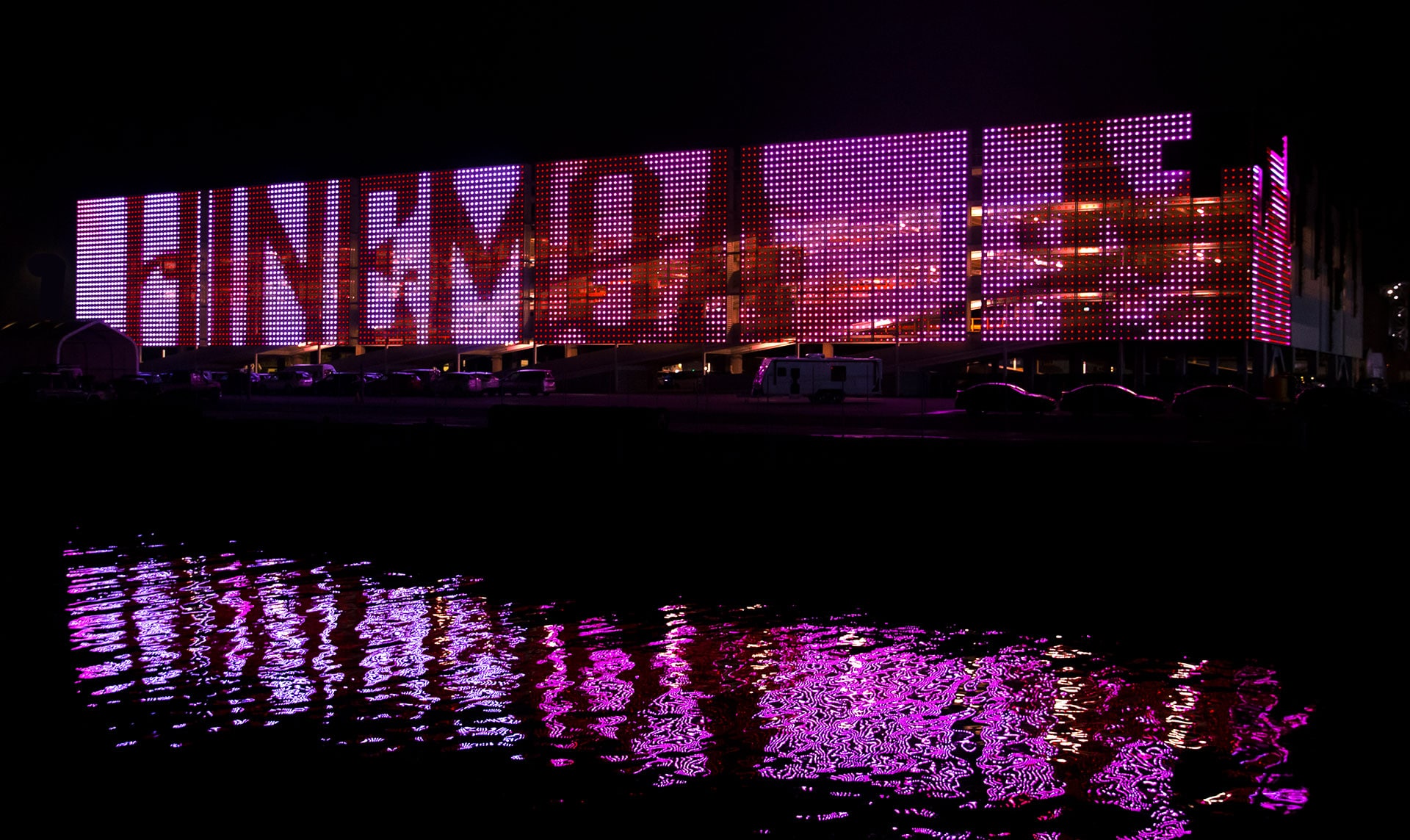
Hinemoana & Papatūānuku tells of the formative and sustaining relationship between earth and ocean – atua.

Written, painted, and spoken at a point of their meeting, the artist gives shape to the deep identity of place: environmental expression honoured in the careful drawing of the symbolic.

Language defines and limits the world we put it to. Ocean and Earth. Hinemoana and Papatūānuku. Words resist and reinstate.

essa may ranapiri (they/ia | Ngāti Wehi Wehi, Ngāti Raukawa, Te Arawa, Waikato-Tainui, Ngāti Pukeko, Ngāti Takatāpui, Clan Gunn) is primarily a poet, but also dabbles in visual arts.

They have a great love for language, LAND BACK and hot chips. Their first book of poetry, ransack, was published in 2019. ECHIDNA is their second book.

Photography: Brett Phibbs

Broken Sovereignty (2022)

(Download) Press release*

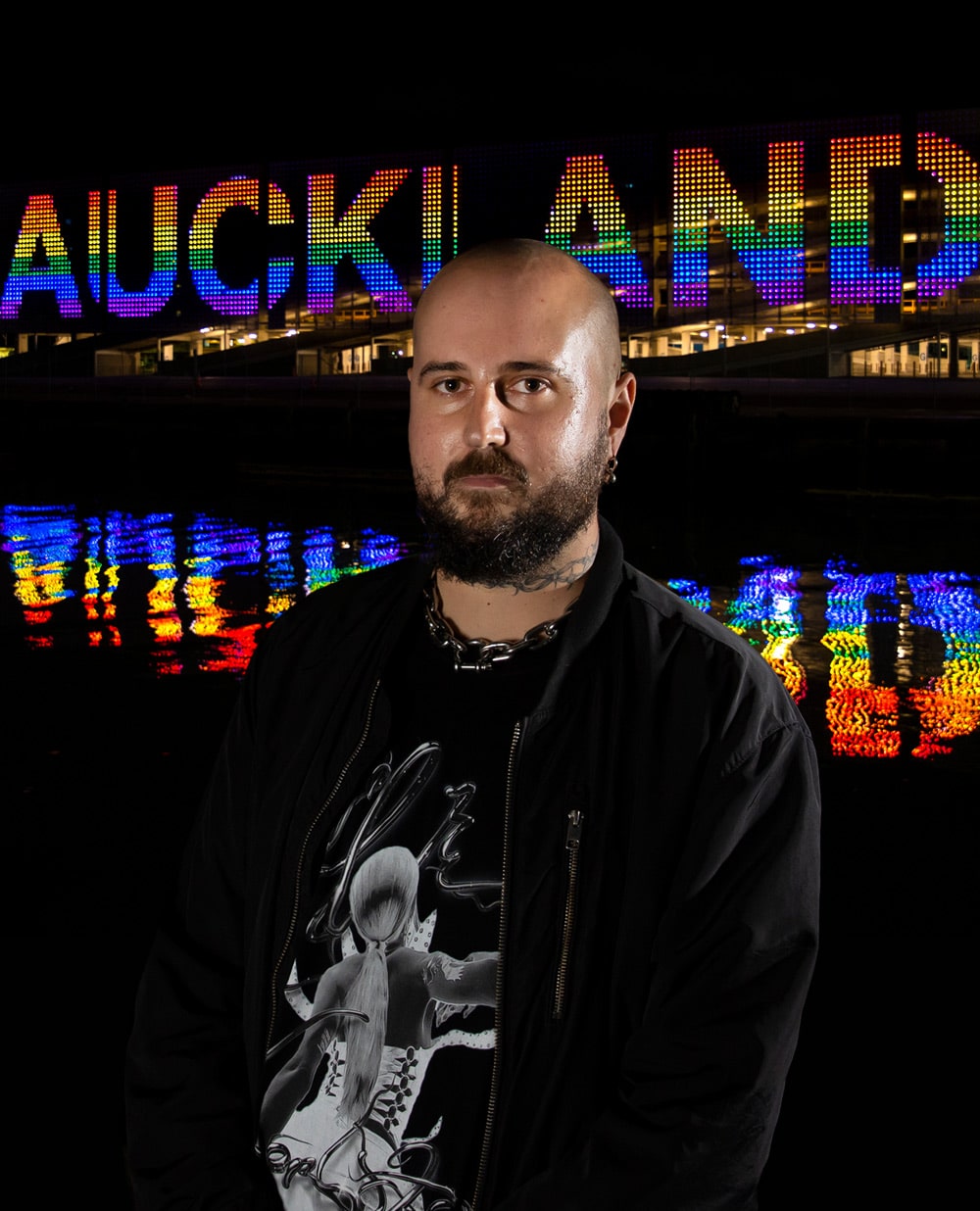
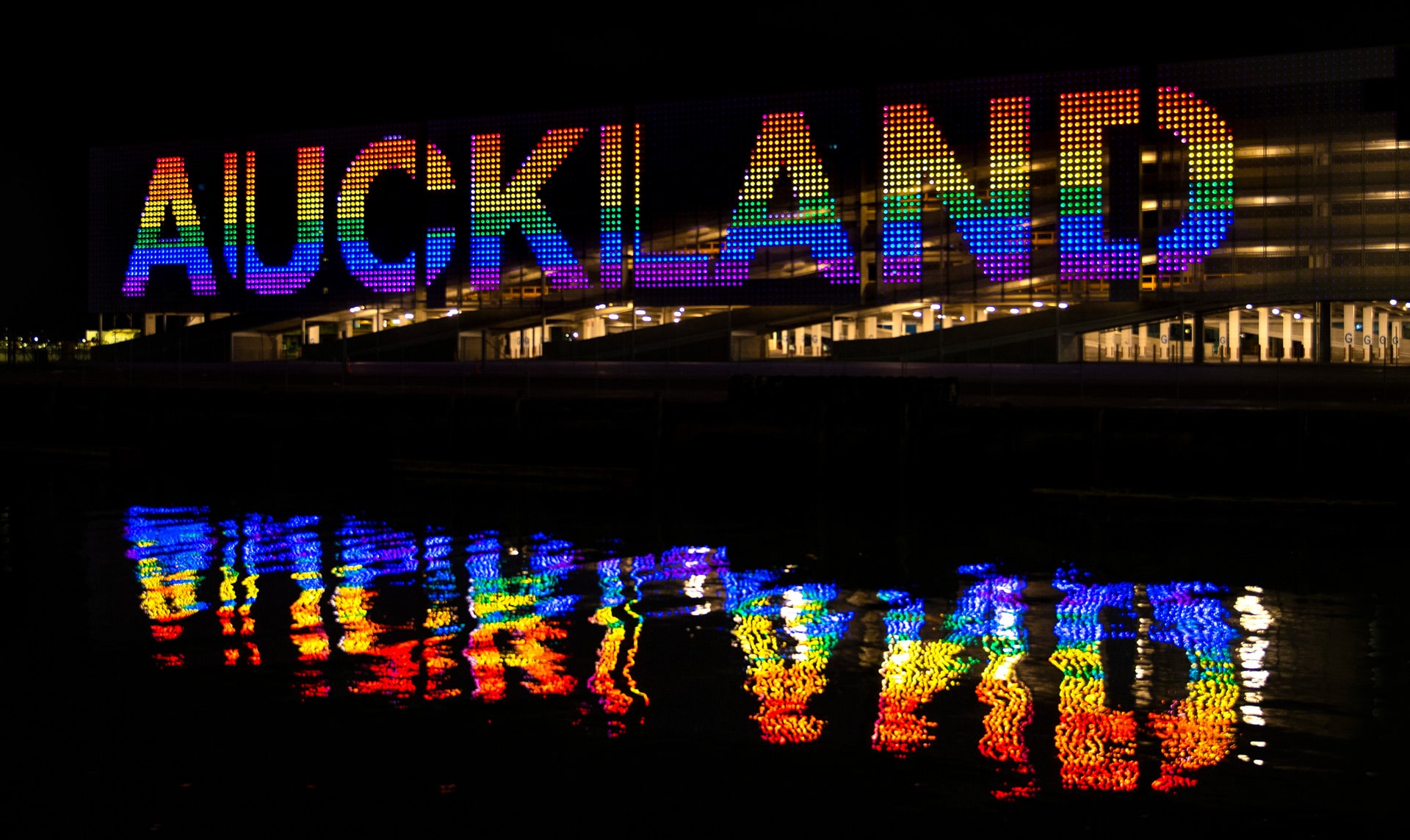
Extending Parasite’s original critique concerning the lack of queer representation in art galleries, director Daniel John Corbett Sanders’ new work reflects on the use and misuse of LGBTQ+ representation in advertising.

Broken Sovereignty will be accompanied by a series of discussions with Sanders around issues of LGBTQ+ representation.

Daniel John Corbett Sanders is a Pākehā artist and curator from Ngāmotu New Plymouth, Aotearoa New Zealand, of Dutch and Ashkenazi descent. He majored in sculpture, and has studied at Elam School of Fine Arts, University of Auckland and Auckland University of Technology. www.danieljohncorbettsanders.com.

Photography: Brett Phibbs

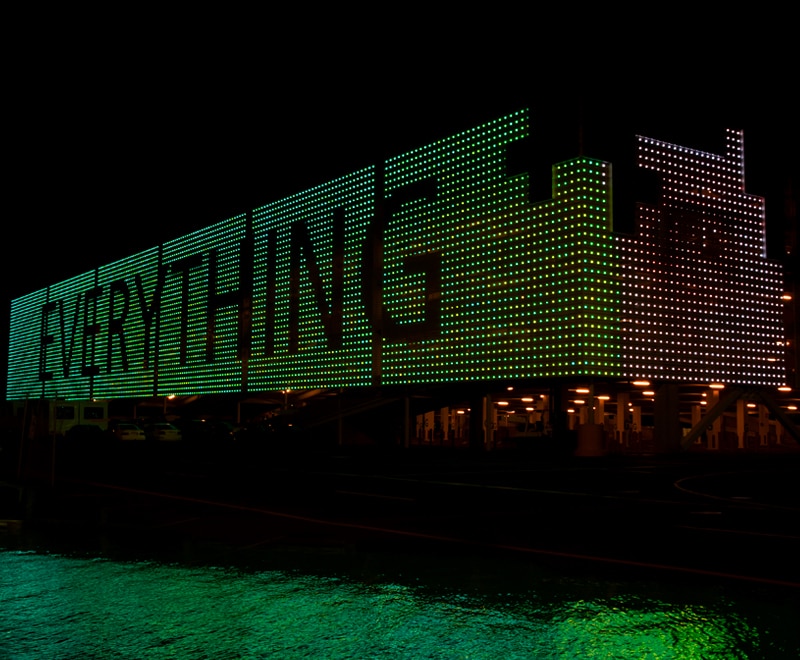
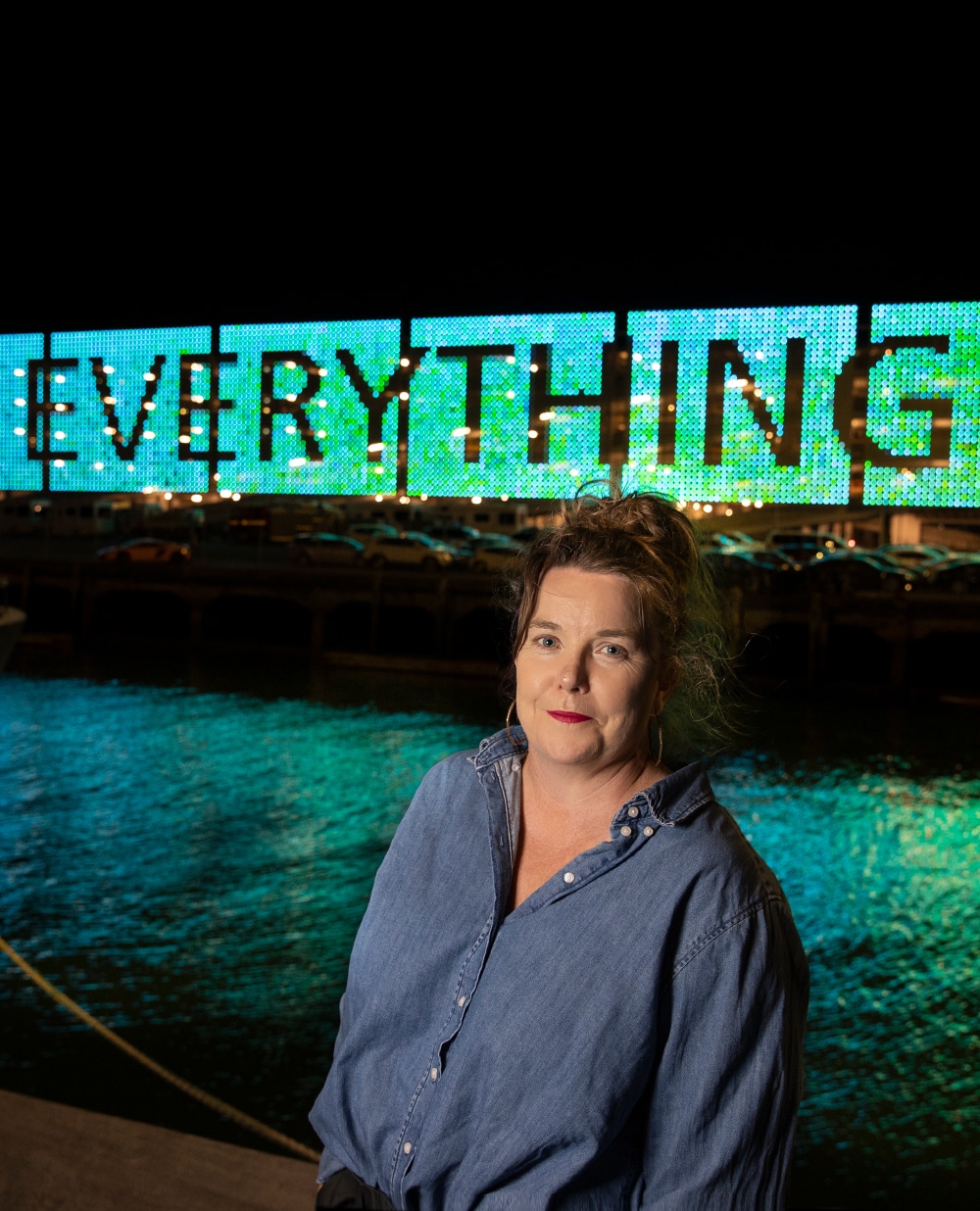
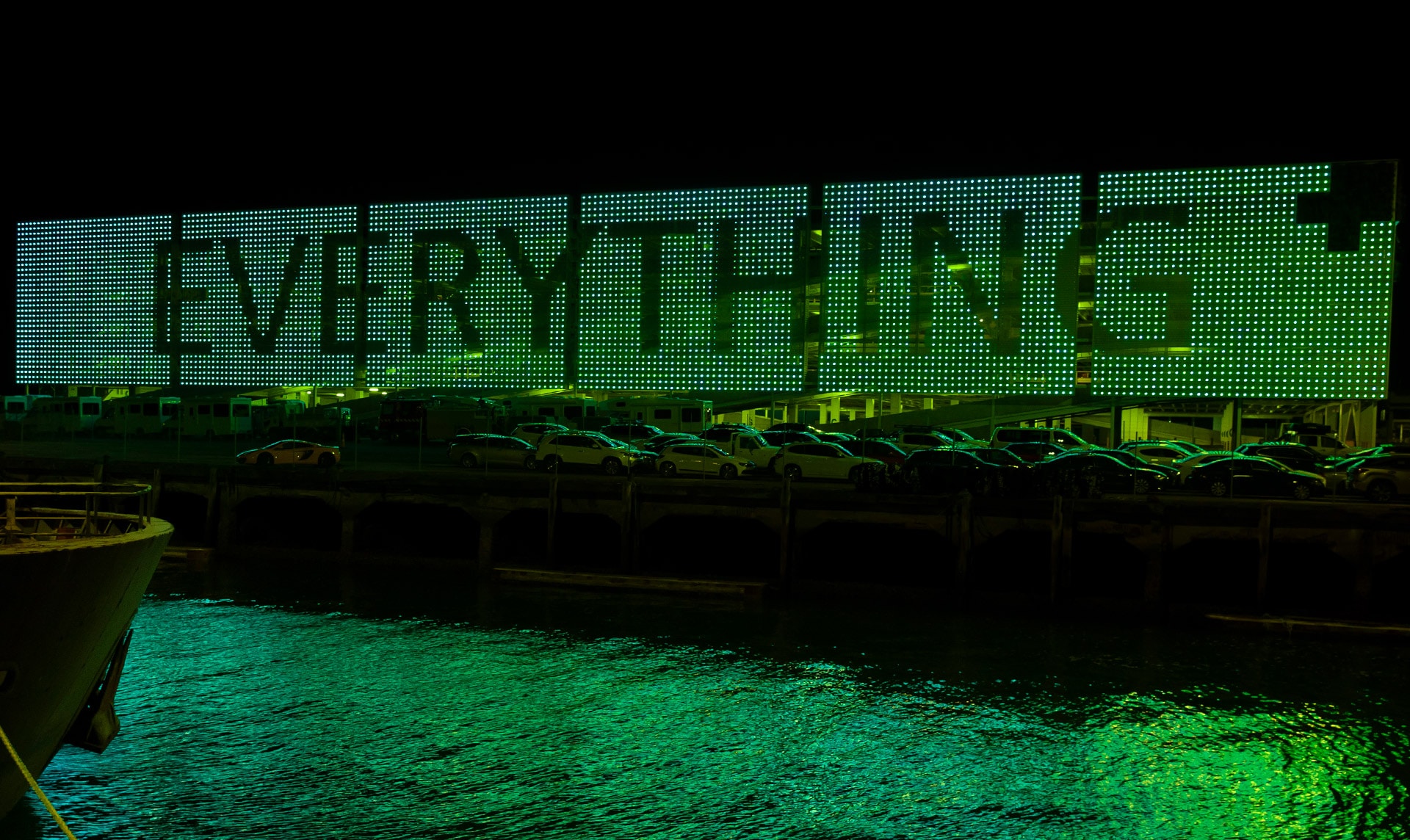
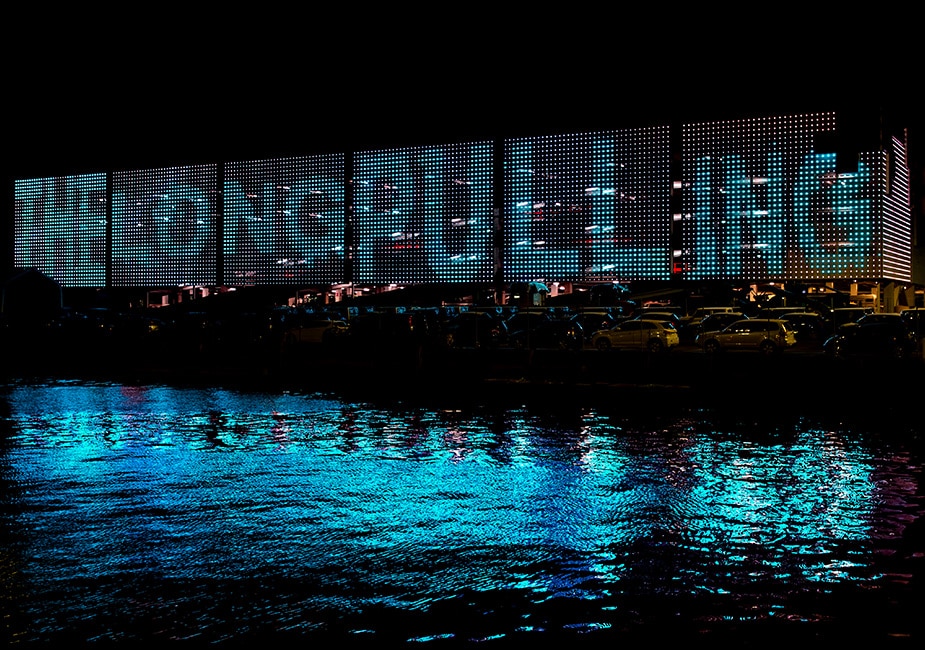
Fiona Jack’s new work reflects on global change in the 25 years between Nothing™ and Everything. Jack’s new work on The Lightship references the 1997 campaign in its typography and imagery, but instead of many ‘nothings’ throughout the city, she offers one ‘everything’.

Everything, the single static word on The Lightship’s LED screen, is accompanied by a podcast — a prompt for public conversation with Fiona and friends.

Fiona Jack is an artist and educator based in Auckland, Aotearoa (New Zealand). Working in ceramics, textiles and social practice, her projects are driven by engagement with local communities and sociopolitical issues. Through dialogue, observation, collecting and digressive historical research Fiona pieces together a fabric of references that inform the development of each body of work.

Fiona has an MFA from CalArts Los Angeles and is Acting Head of School at the Elam School of Fine Art at The University of Auckland.

Photography: Brett Phibbs

For SINŌ, the identity emerging from this archetypal encounter on the shore is ‘Kiwi’. Whakakiwi can be interpreted as ‘how to become a New Zealander’ or, ‘the making of the New Zealander’.

The usage of ‘Kiwi’ to name a person who lives in newzooland signals a belonging to a specific ideological new zmiddlearthland — one that has overcome its colonial beginnings of forceful nation building and control over indigenous life.

Breeded and birthed in Tāmaki Makaurau, this practice falls along the failures of a necropolitical factory of transgenderist-homoheterosexualising-monstrous-dissident-taniwha-of-the-western-binary-of-sexual-difference-and-an-enemy-of-the-country-colony-and-crown.

Photography: Brett Phibbs

Kupesi Sisi Huelo ‘oe Taulanga Waitematā moe Funga Tāmaki Makaurau (2021)

(Download) Press release*

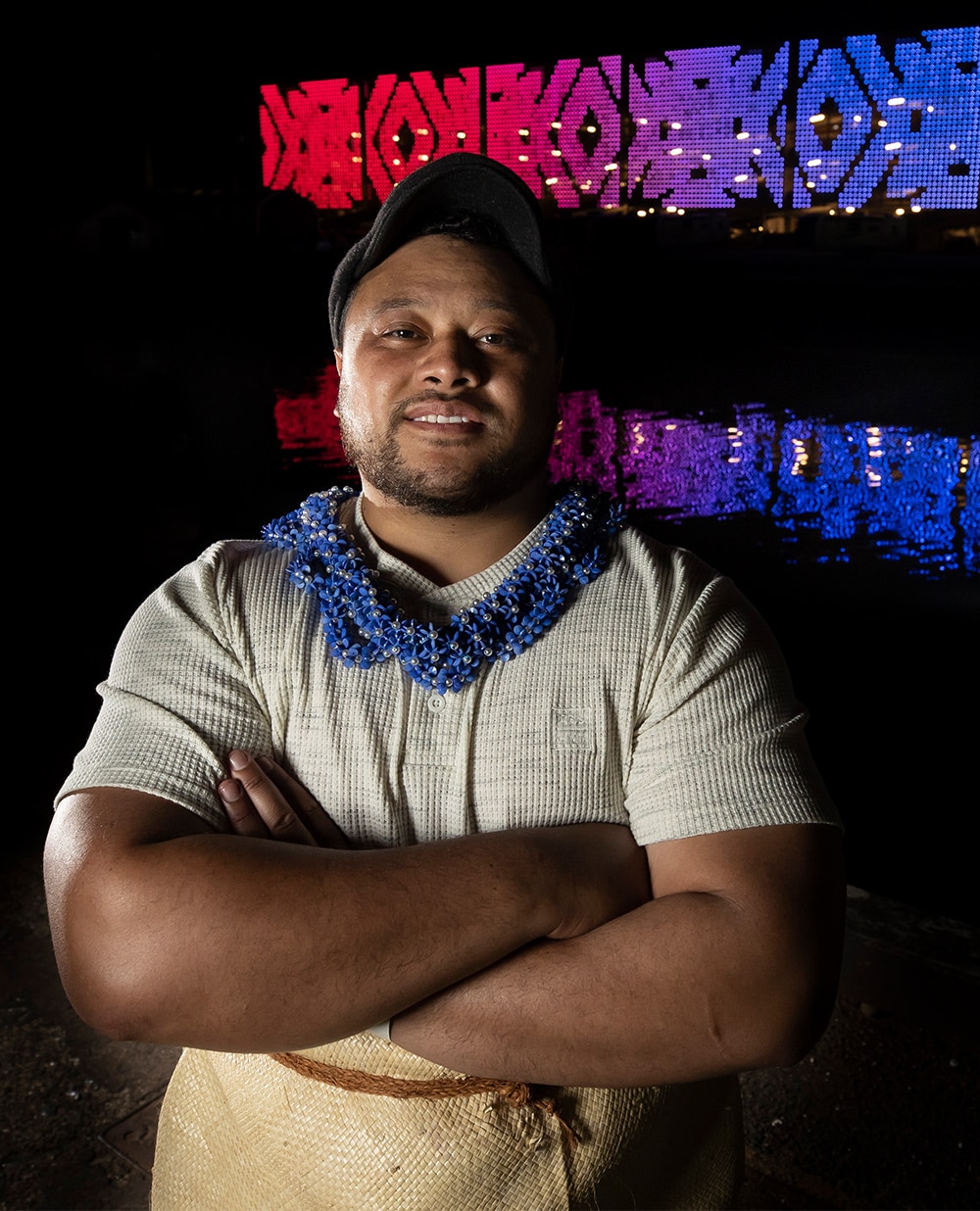
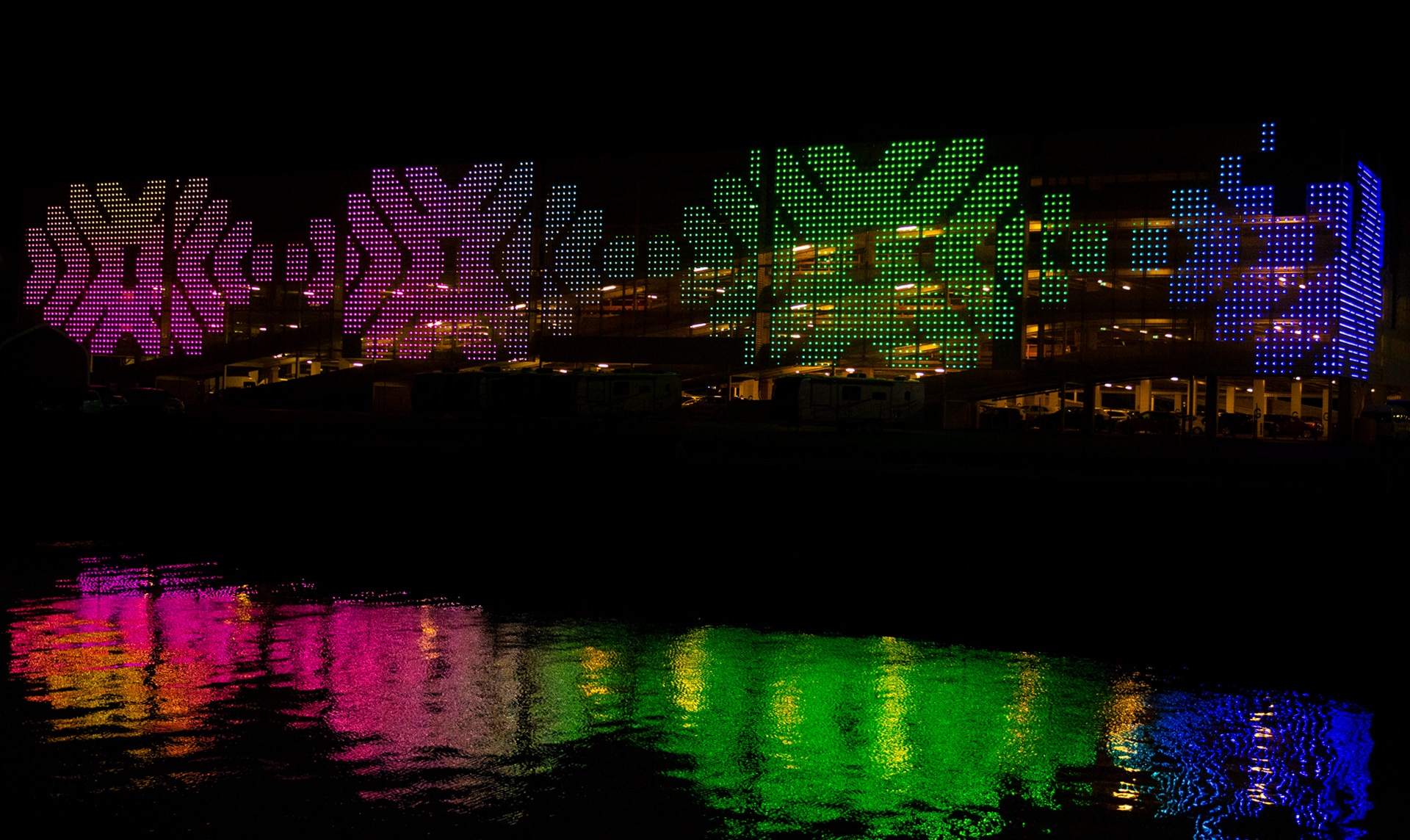
Emitting its light onto the water and into the environment, Kupesi Sisi Huelo ‘oe Taulanga Waitemata moe Funga Tāmaki Makaurau adorns The Lightship, harbour, and city. A sisi (garland) of light beams (huelo), this patterned adornment was created from and for the spaces of the port and its surroundings.

Extracted audio wave spectrum from sounds recorded at the Ports of Auckland, the Waitematā Harbour and Auckland CBD provided the artist with high, medium and low frequencies. Generating visual patterns from this raw sonic material, the artist reimagines these spaces through the sense of listening.

Sione Faletau is a multidisciplinary artist born in Auckland with Tongan heritage. Utilizing art as a vehicle to explore his heritage has led him to undertake Doctoral research on Tongan masculinity from an Indigenous perspective. As of late, his interest has been in creating kupesi (patterns) from extracted audio waveforms from songs, audio recordings and field recordings of environments.

The audio waveforms give him a material that can be manipulated into kupesi. This innovative way of creating has opened a new language and a different way of seeing kupesi in the contemporary realm.

Photography: Brett Phibbs

Composing together numerous languages of the Waitematā and its shoreline, Onepanea looks at the communication of and in a place as a force that can both define it in meaning and physically shape it.

Assembling languages that are human, nonhuman, those in everyday use and those less in currency, Onepanea works through a linguistic strata of the Lightship’s place.

Natalie Tozer is an artist and experimental filmmaker based in Tāmaki Makaurau. Working closely with behaviours of ‘the underground’, her process often involves burying and unearthing objects and information. Recent shows include Emerging Artists Show at Sanderson Gallery, Salted Earth at Sosage Gallery and Goofer Dust at Elam Project Space.

In 2021, her work was selected for Femisphere 4 and was a National Contemporary Award Finalist. Natalie holds a PGDipFA with distinction and is a MFA candidate at Elam School of Fine Arts.

Sam Tozer (Kāti Māmoe, Pākehā) is a co-director of LOT23 – a film studio, gallery and live music events centre. He is also a long time collaborator of Lisa Reihana, being her DOP / Technical director / VFX / compositor for Ihi installed at the Aotea Centre in 2020, Nomads of the Sea 2019 and In Pursuit of Venus {infected} which represented New Zealand at La Biennale di Venezia 2017.

With over 20 years experience, directing, editing, creating visual effects and shooting for music videos, drama, advertising and fine art projects he is pleased to collaborate for the first time with another creative force in his life; his co-director at LOT23, wife, mother of children, and writer of bio's Natalie Tozer.

With special thanks to Te Reo consultant Kiriana O’Connell (Ngāti Tukorehe, Pākehā)

Photography: Brett Phibbs

Lucy, Kathleen, Katherine, Karen, Hinemoa, Maata, Marina, Lily, Carlotta, Miringa, Agnes, Loretta, Abigail, Elizabeth, Hori, Sonny, Tataingaoterangi, Andrew, Georgina

Pūtahitanga kura opens with this list of names. They are whānau, ancestors, and literary figures; a constellation of identities whose names have graced, confined, or augmented self-hood. Names that arrive to us presently having gathered the events, losses, and meanings of those who bore them.

Based in Tāmaki Makaurau, artist Abigail Aroha Jensen recently graduated with honours from Toihoukura School of Māori Visual Art and Design in Turanganui-a-kiwa.

Recent work includes Ngā Haki o te Tangata; Whiri Whiri Muka Tangata (2020), Occupied Territories at RM Gallery with Avigail Allan and Naomi Allan (2021).

Based in Turanganui-a-kiwa, Georgina Watson is an artist and writer, graduating with a Masters in Fine Arts from Elam School of Fine Arts, and a Bachelor of Media Arts Majoring in Painting and Sculpture at Wintec.

Recent work includes the group show They Covered the House in Stories, curated by Amy Weng for Te Tuhi (2021), Eternal Girlhood of the Settler State, presented by May Fair Art Fair in collaboration with Tyson Campbell (2020).

With special thanks to Design Technician, Jim Haung.

Photography: Brett Phibbs
Cinema was Monū’s teacher. They are “made up of movies”. Narratives and images from elsewhere spoke to feelings and experiences not reflected in Monū’s immediate environment. Spanish melodrama and Japanese animation gave permission to the queer part of the artist’s identity. Now, as the artist actively reimagines characters from global cinema as Tongan, they seek a Pacific cinematic language; to view and make movies that reflect the wide, vastly different, personal and intricate diasporic experiences of Pacific peoples in a global society.

Sione Tuívailala Monū is an artist of the Tongan diaspora. They live between Canberra Australia and Auckland, and works across the mediums of photography, moving-image, fashion and adornment, performance and drawing exploring identity, family and pasifika queer experience in the diaspora.

Recent exhibitions include: Spheres: An Online Video Project, 2020; Christchurch Art Gallery, Kahoa Kakala, Fresh Gallery Otara and Objectspace, 2017; Statuesque Anarchy, Enjoy Public Art Gallery, Wellington, 2017; Pouliuli, Westspace, Melbourne, 2017; Making Space, Centre of Contemporary Art Toi Moroki, Christchurch, 2017; GG Talk That Talk, Fresh Gallery Ōtara, 2016.

Photography: Brett Phibbs
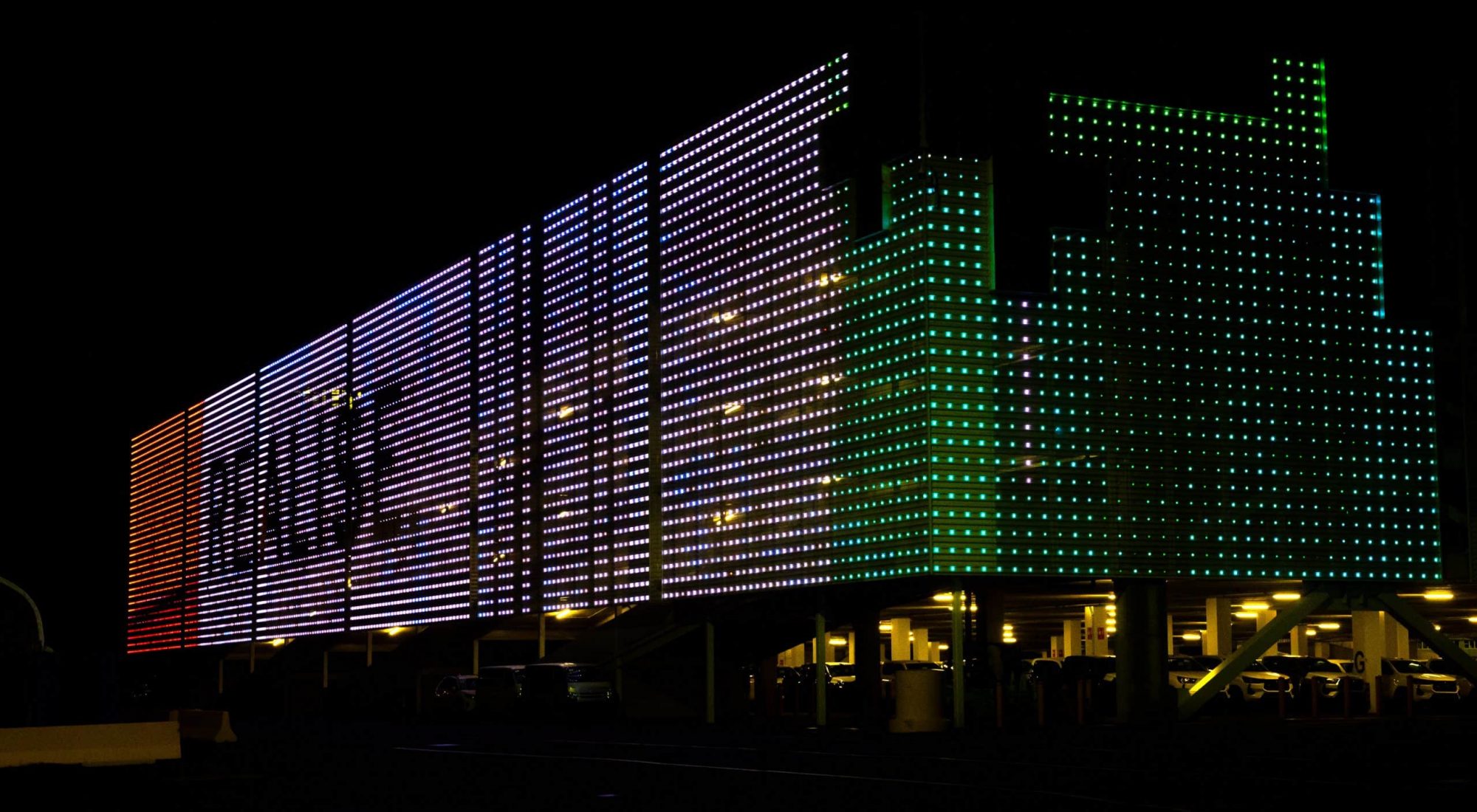
Tyson Campbell presents a lyrical and biographic tale. Set to the poetic and political device of rap music, the city boy biography narrates the complexity of navigating citylife as “white-palatable Māori”. Like a series of thoughts noted-to-phone on the bus ride-home, Skylined memoirs the feelings and tones of living in Tāmaki Makaurau Auckland.

Tyson Campbell (Te Rarawa/ Ngāti Maniapoto) is an Auckland-based multi-disciplinary artist whose work is engaged with the relationships between the indigenous and the settler-state imaginaries. Campbell’s research focuses on Indigenising ways of knowing through relationality and the agency of Whenua.

Tyson is part of the Wominjeka Djeembana Research Lab at Monash University and is also Assistant Curator at Artspace Aotearoa.

Photography: Brett Phibbs
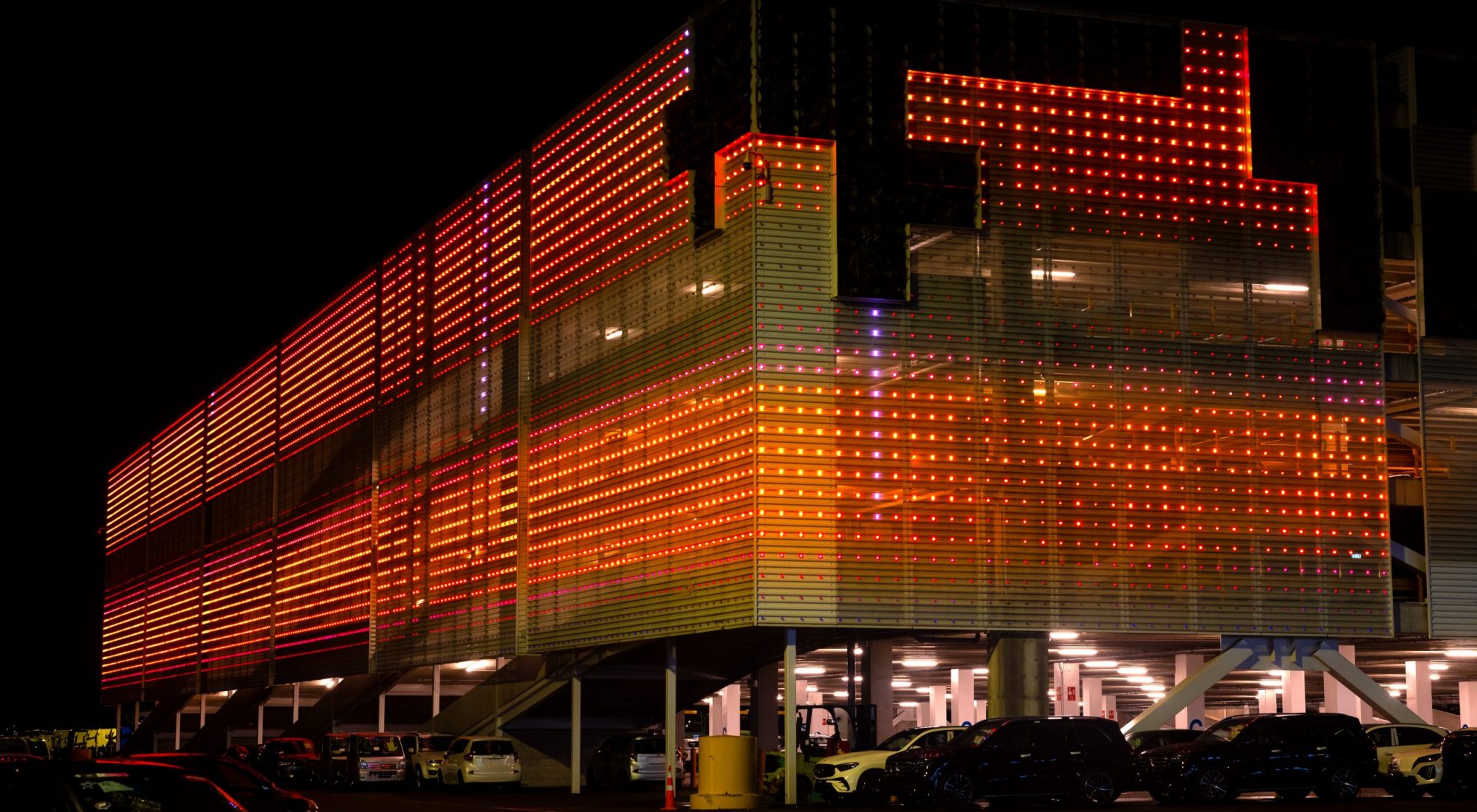
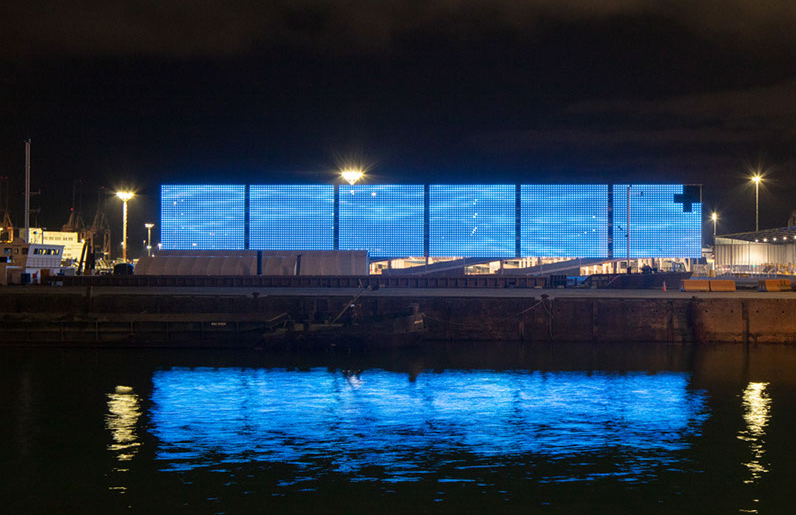
Sorawit Songsataya: “Come up for air studies the ecology of the water and its edge. Reducing these large and intricate habitats to patterns and movement, the artist maps processes of coordination in the harbour’s natural life and the port’s industry. Borrowing synchronicity from these two differing rhythms, Come up for air looks at the idea of sustenance through contrasting scales of mass economic systems and day-to-day gathering of food.”

Sorawit Songsataya’s practice explores the many tangents that connect and redefine our understandings of subjectivity and ecology. Songsataya often employs moving image and sculpture within installation environments, incorporating both digital and tactile media to engage with world-making in imaginative and tangible ways. Recent exhibitions include Rumours (Mermaid), Govett-Brewster Art Gallery (2020) and The Interior, Auckland Art Gallery (2019).

Photography: Brett Phibbs
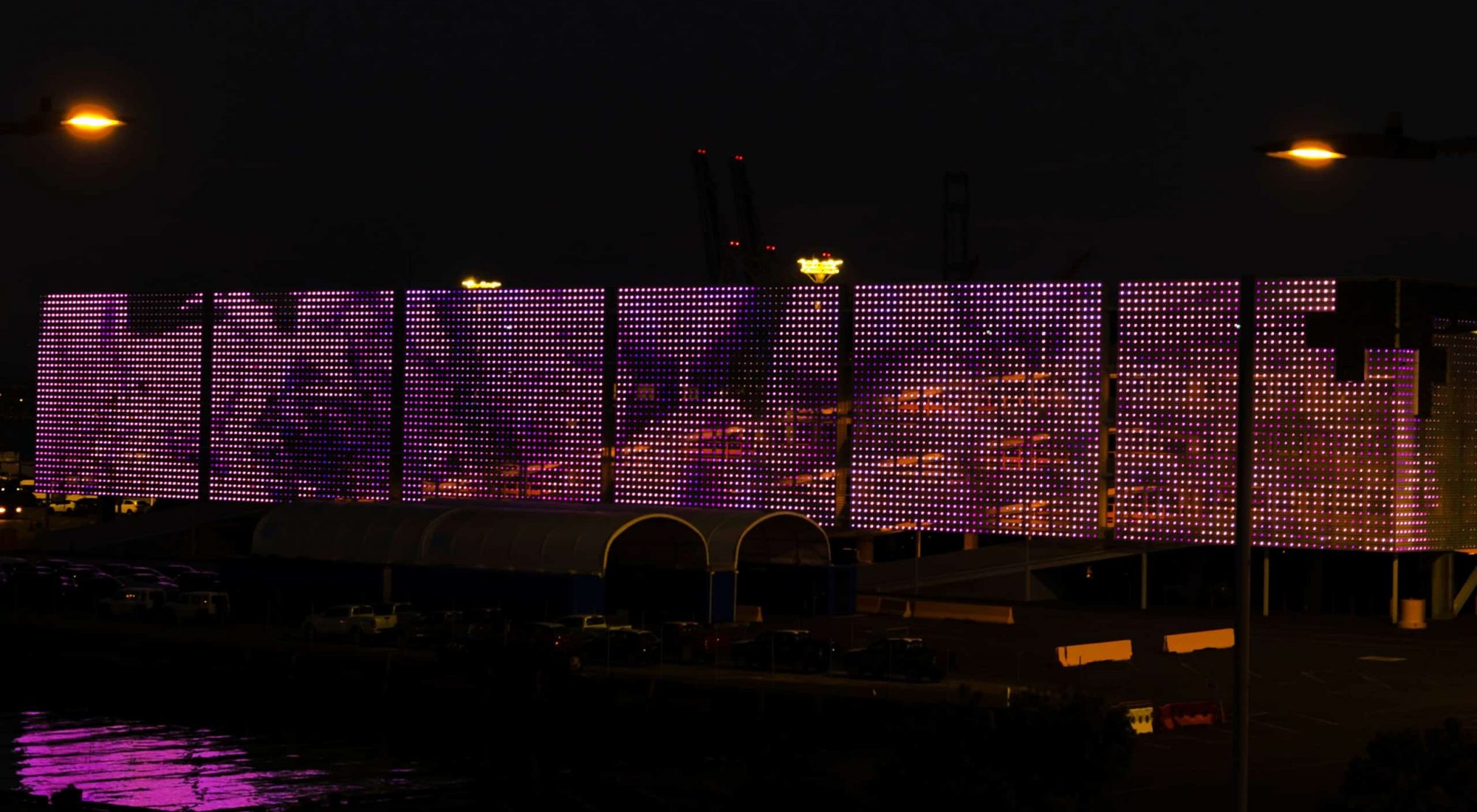
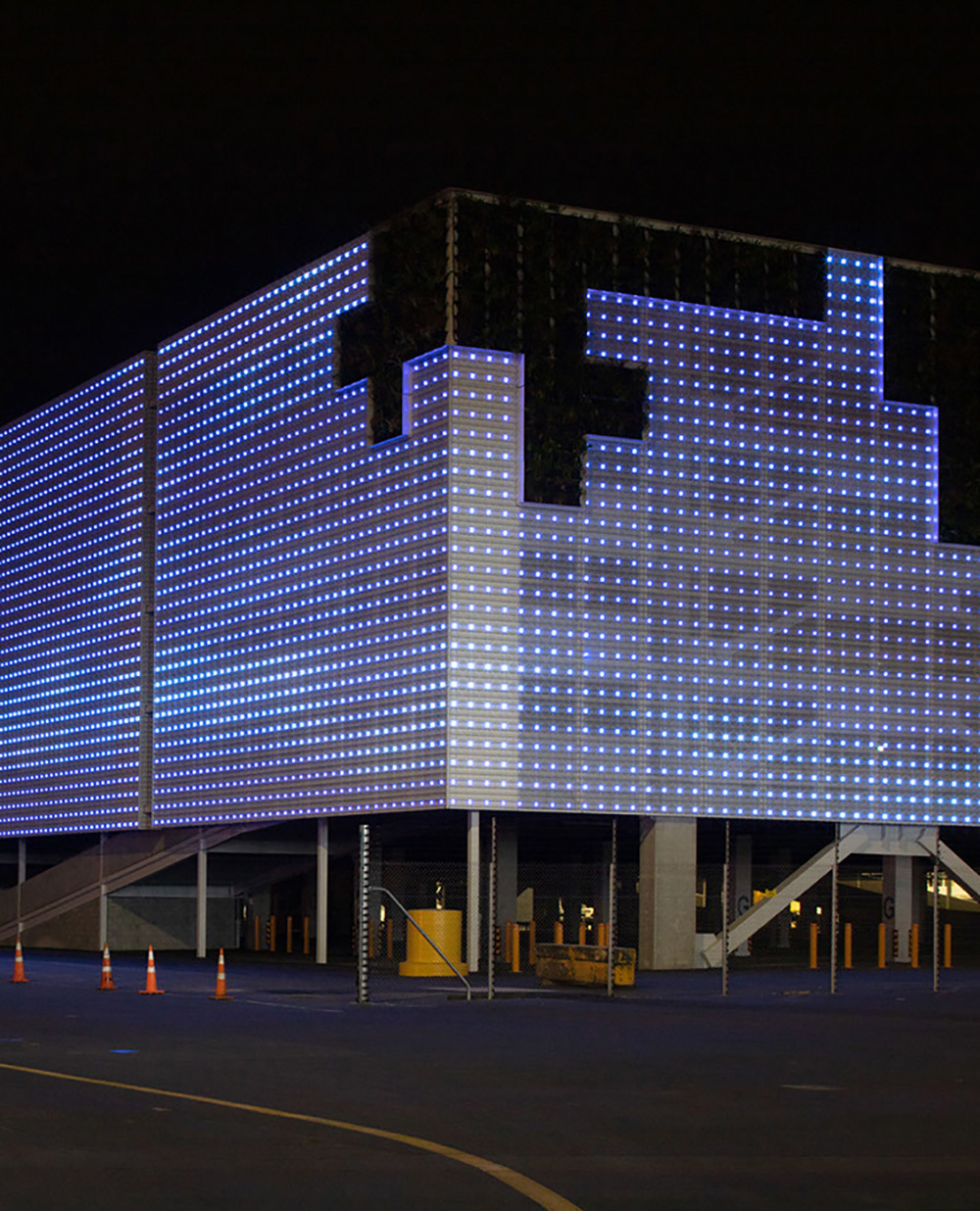
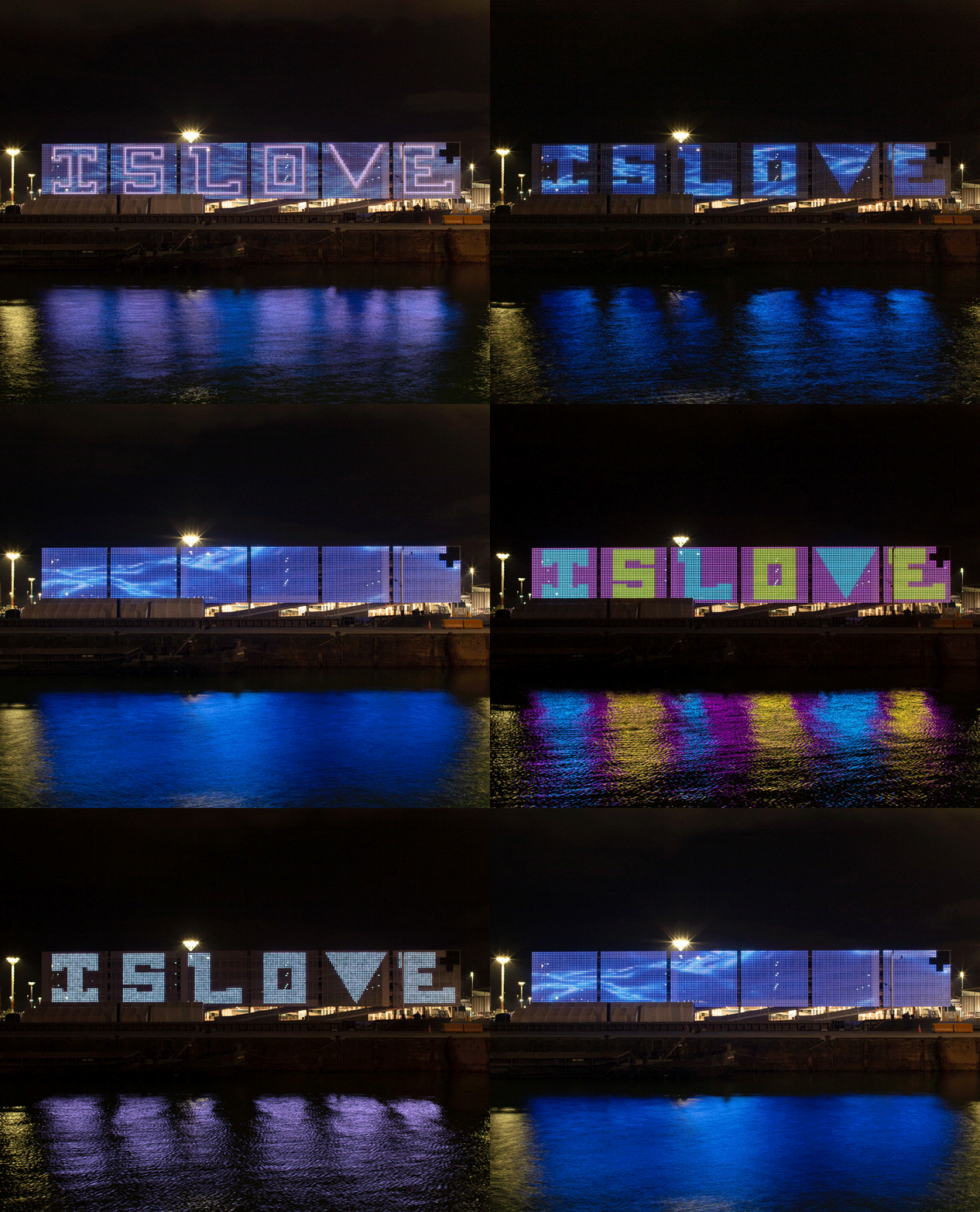
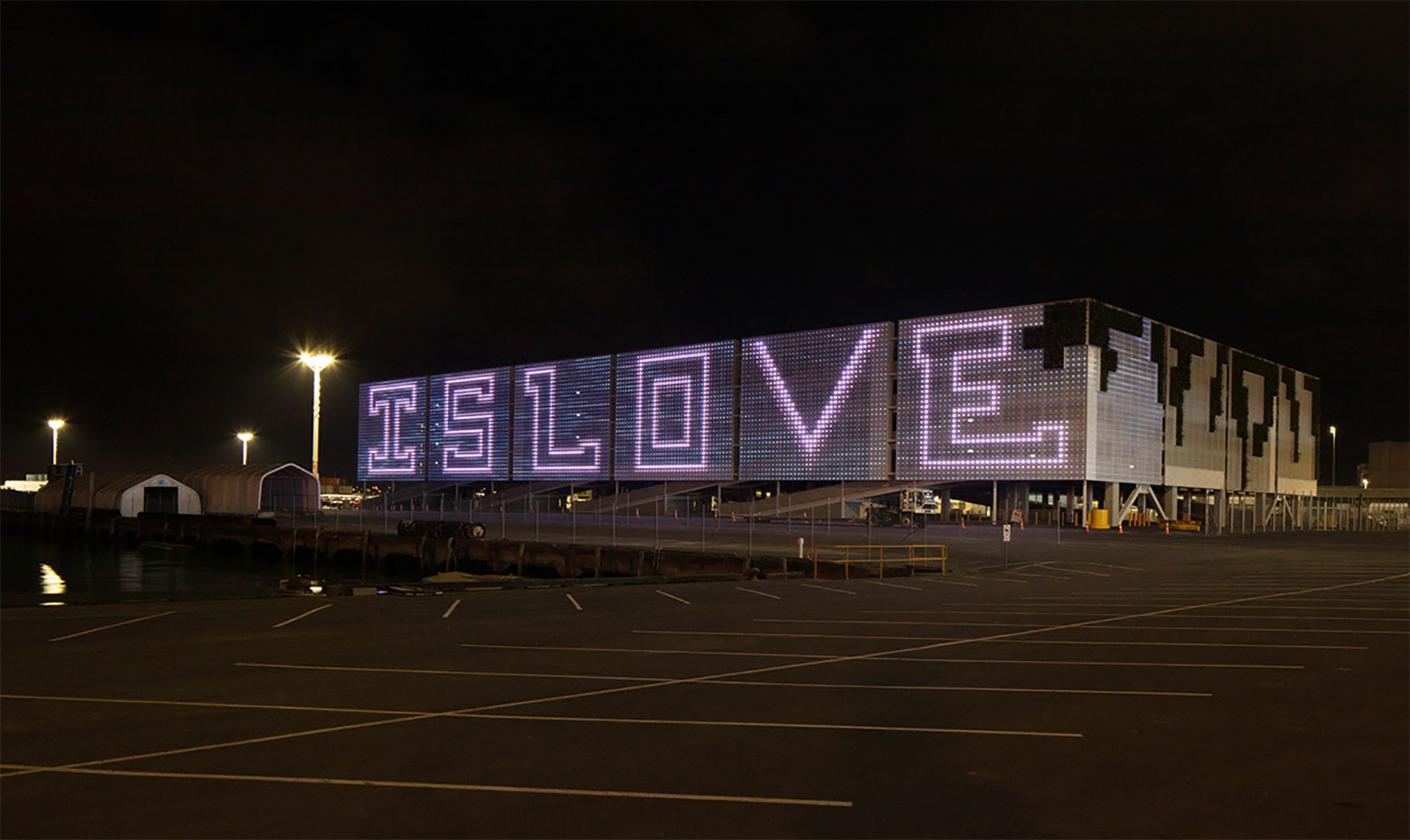
Janet Lilo: “Created for a future defined by the current global pandemic, BLM, social and political upheavals, and great loss, ISLOVE refocuses Auckland’s harbour as a place of connection and light.”
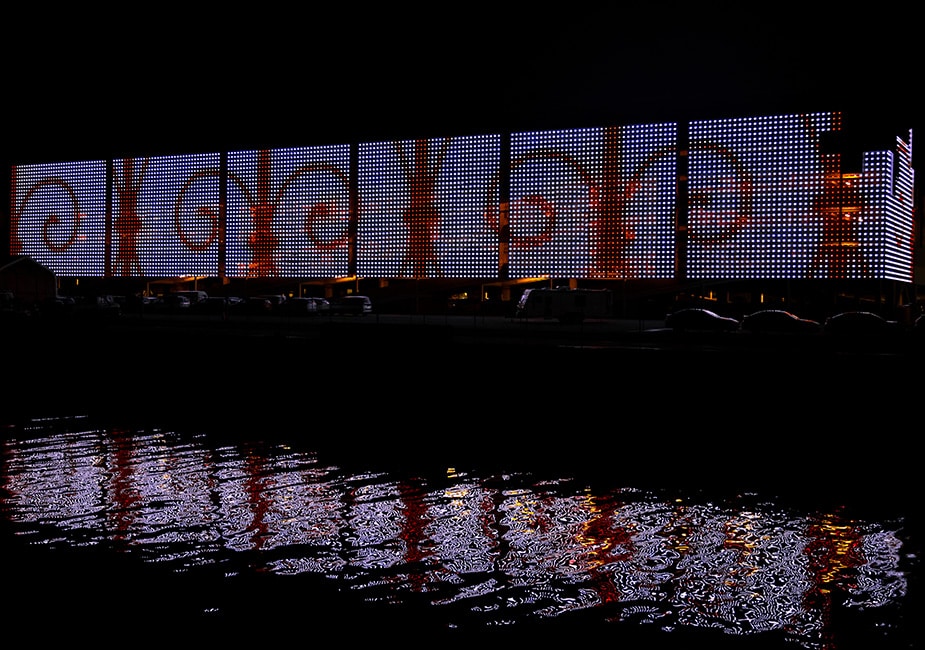
Janet Lilo (b.1982, Te Rarawa, Samoa, Niue) lives and works in Tāmaki Makaurau Auckland. Her work has been exhibited in Asia, Europe, America and Moana Pacific - with extensive shows throughout New Zealand - from Auckland Art Gallery, Te Papa Museum and Christchurch Art Gallery. www.janetlilo.com.

Photography: Simon Devitt

TOP